Amira shopped for Cuban cookbooks at Trinidad's book store.



Amira shopped for Cuban cookbooks at Trinidad's book store.

In Trinidad, Cuba.
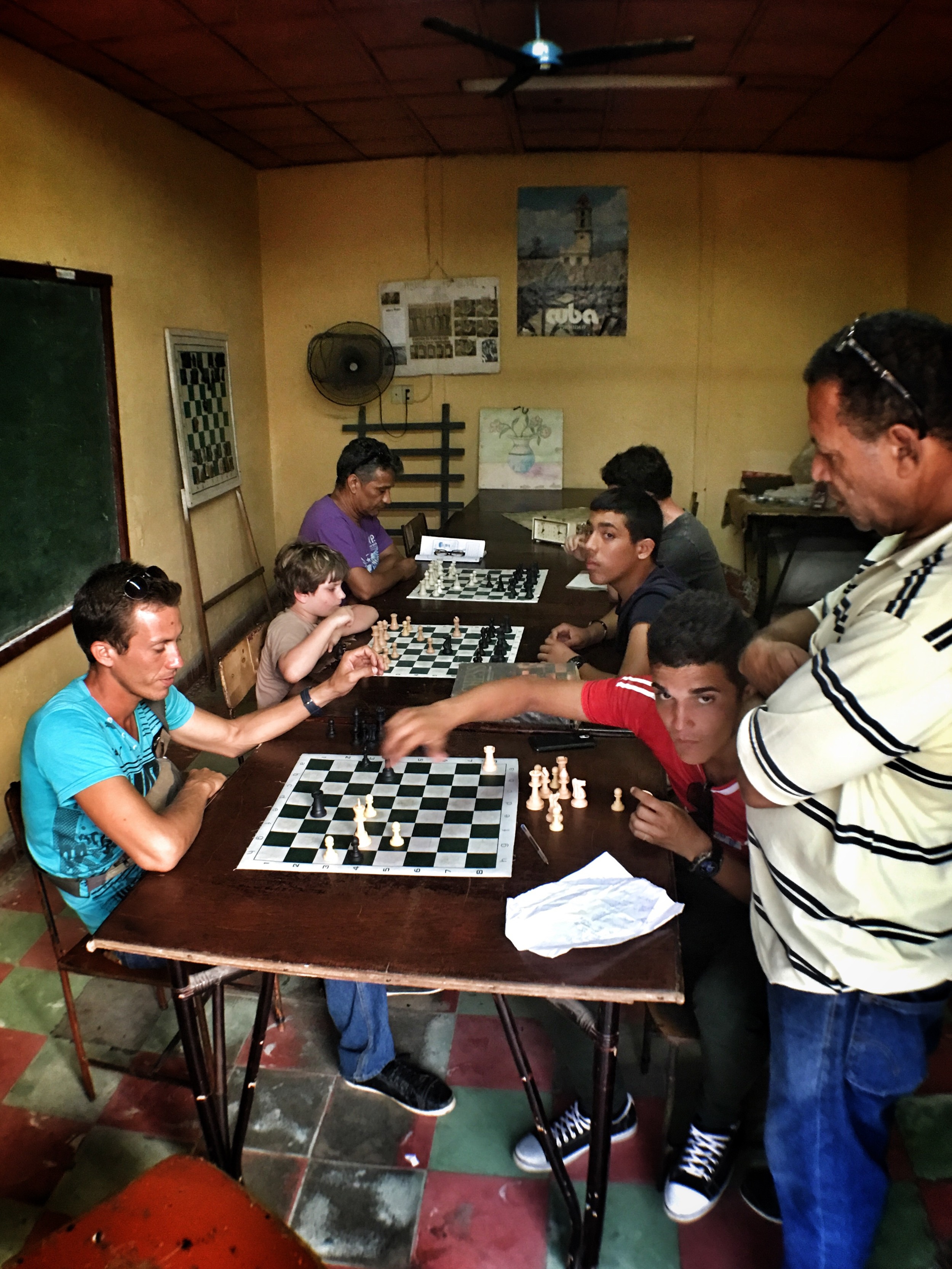
In Trinidad, Cuba.
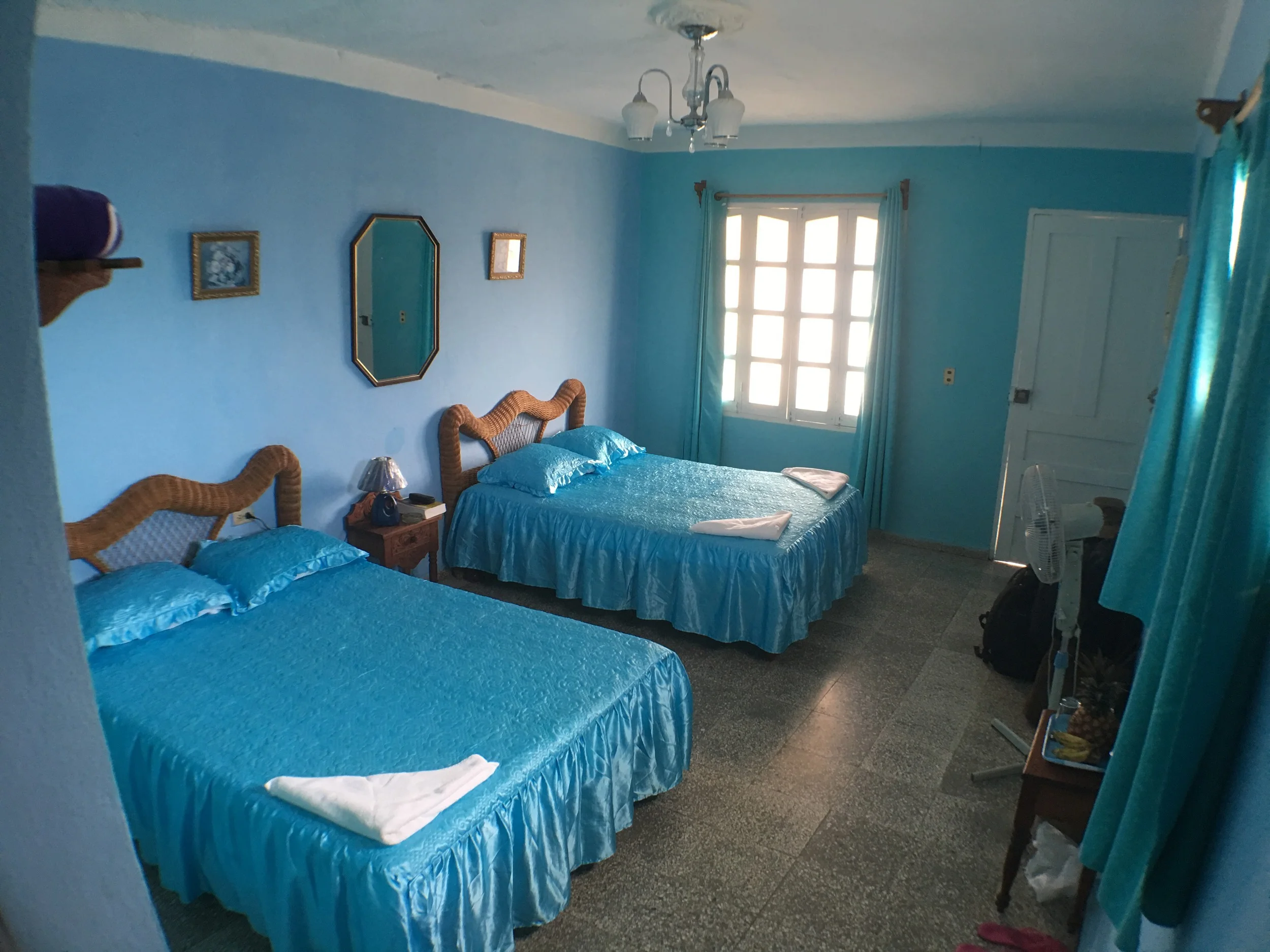
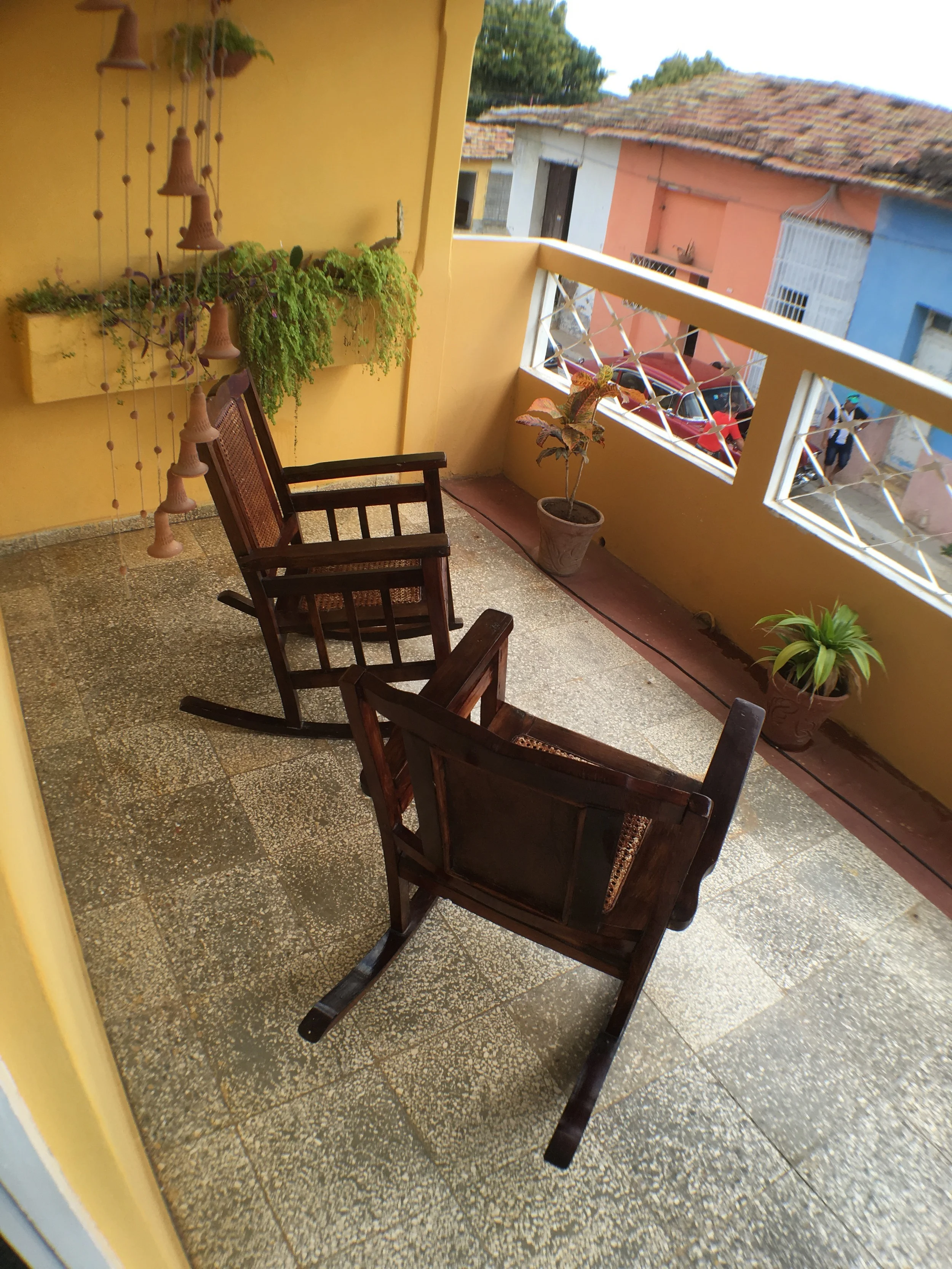
It's the same casa particular, but a better and bluer room.
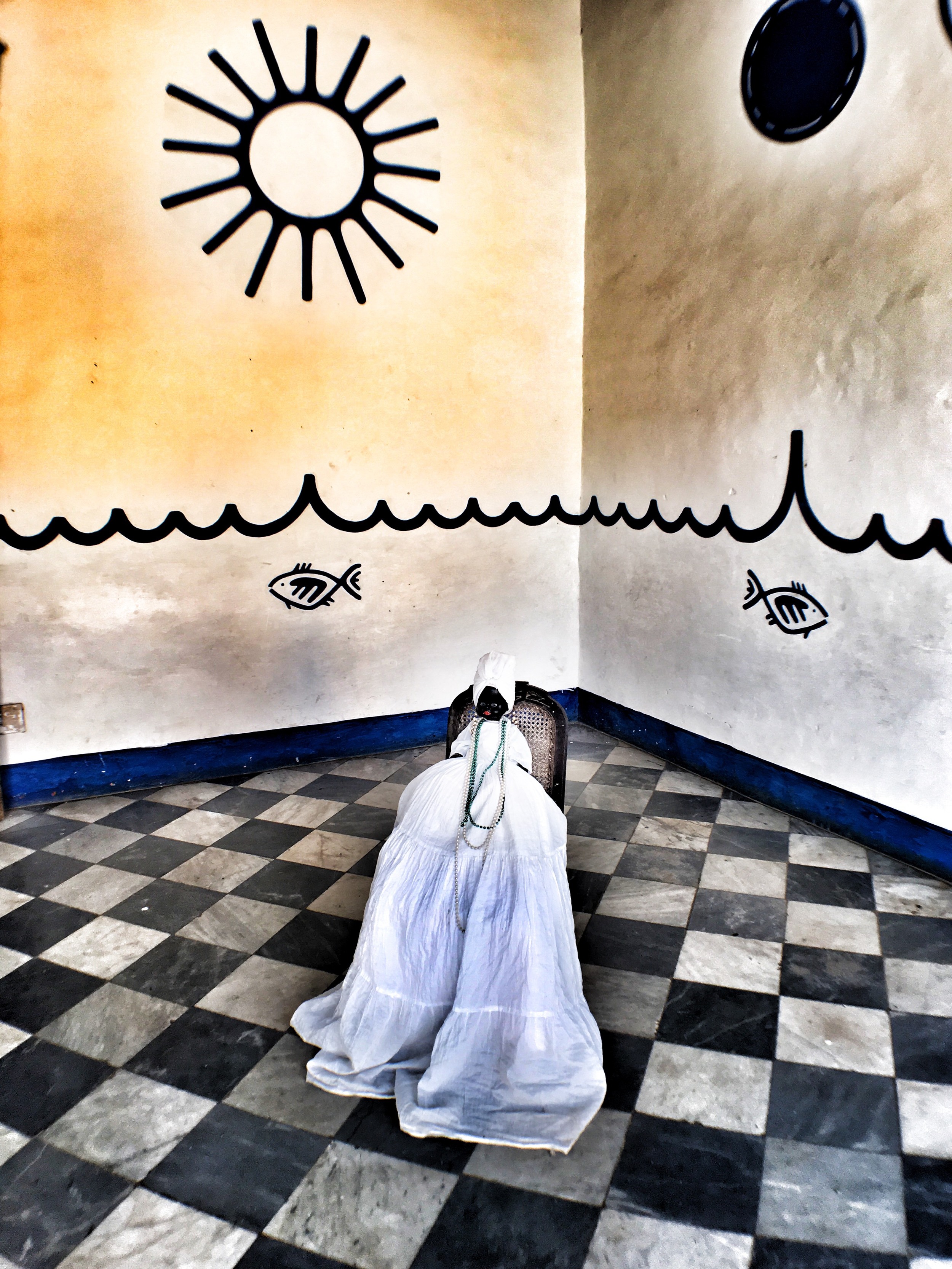
Saw this in Trinidad.

These old cars never get old.

Nice place to work, actually.
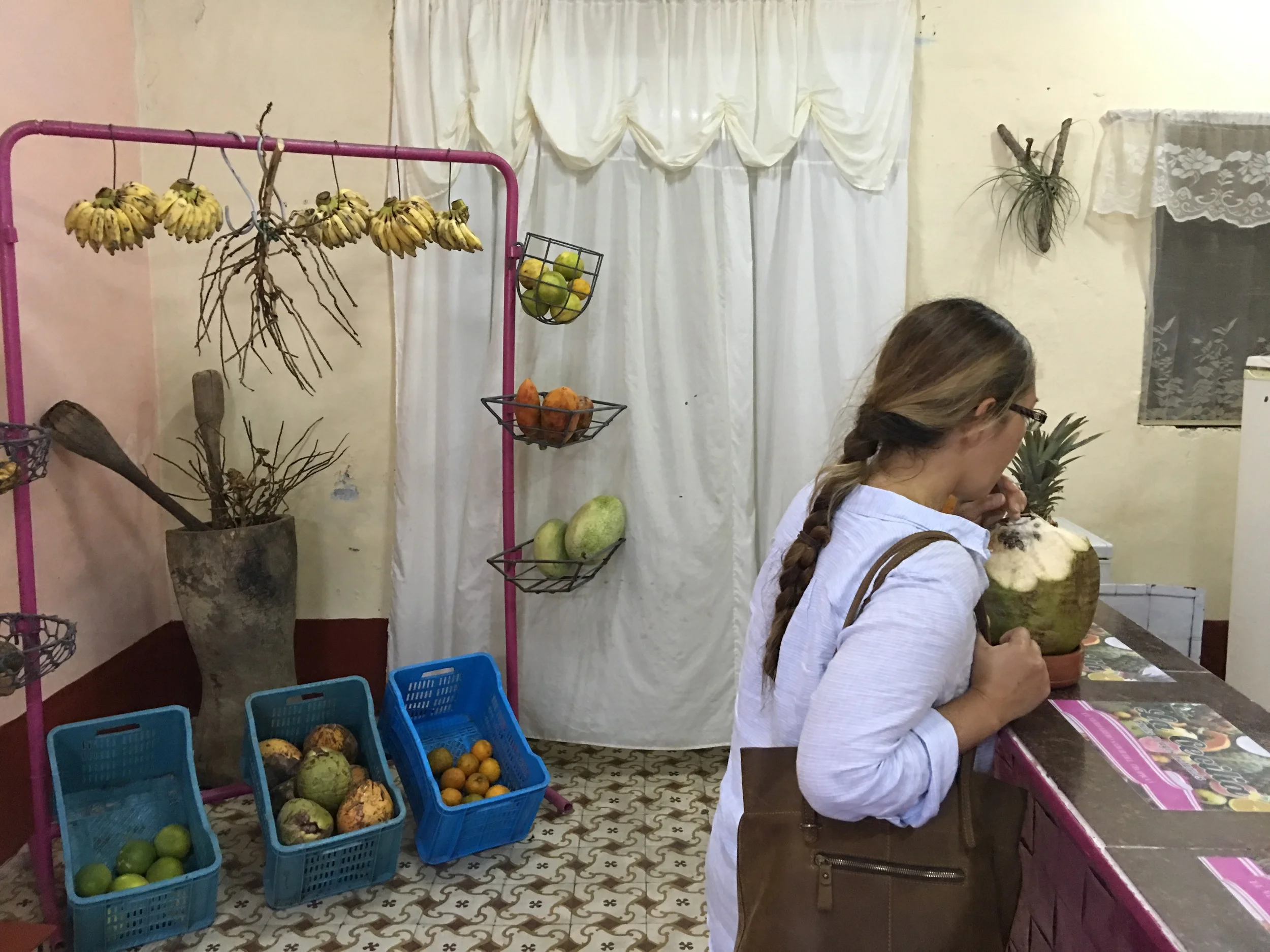
Such establishments are far too rare in Cuba.

The tourist buses are air conditioned and comfortable.
This is how most of the locals ride the bus.

Cubans don't use containers for things when they don't have to. I've noticed that bread is one category deemed safe to transport container-free. They don't ship them in boxes or bags, but in piles or stacks.
Here's an example: The bread is stacked up in the truck. They move the bread by placing the stacks on some kind of fabric and carrying the fabric.
The upside is that it's eco-friendly. They're not using, then discarding, mountains of plastic. The downside is that the bread is being handled by multiple pairs of unwashed hands in its journey from the bakery to the store or restaurant.
(Come along for the ride! It takes 5 seconds to subscribe to my "Becoming Nomad" newsletter: http://eepurl.com/bTZCIT )

We discovered a tiny joint in Trinidad called El Zaguán, which serves mainly coffee, juices and other beverages, but also has three or four food items. One of these is what they call "tortilla," which is like a thin omelette left unfolded on the plate. Another is a chicken sandwich.
So Amira asked for a chicken sandwich, hold the chicken and substitute the tortilla.
He made them for us and they were delicious.
But then everyone else who came into the restaurant and pointed to our sandwiches and said: "I want that." Soon this guy was making almost nothing but these egg sandwiches.
As I write this, a table of these egg sandwich eating tourists is commenting that it's the best breakfast they've had in Cuba.
Dude, put it on the menu! (And about that menu, Amira has a few more ideas....)
(Come along for the ride! It takes 5 seconds to subscribe to my "Becoming Nomad" newsletter: http://eepurl.com/bTZCIT )

There are thousands of different species of banana, or were, and all the bananas in the US represent just one of those species.
Here in Cuba, we ordered a fruit plate and noticed that the bananas were different. These are creamier, stronger in flavor -- kind of like a cooked plantain. Very delicious.
(Come along for the ride! It takes 5 seconds to subscribe to my "Becoming Nomad" newsletter: http://eepurl.com/bTZCIT )

My heart rejoices for the simple fact that we're in Cuba. But one of the most joyous moments we experience when living abroad are those when we meet amazing people who become our friends.
We've been fortunate to meet people with the warmest of hearts who have helped us way more than I could ever have imagined. I'm so moved by the kindness and generosity of people who just a few days ago were strangers but are now friends for life.
Living in a country like Cuba is amazing and adventurous but not easy. It's definitely not ready for the increasing and unprecedented number of visitors in the last two weeks.
Cuba simply lacks the infrastructure at this time. Car rentals, lodging and transportation are just some of the obvious areas of shortage. But even finding bottle water has been difficult. And when I find it, I usually clean them out.
Of course, by comparison, as a spoiled American, my issues are minuscule and insignificant. The real challenges are those faced every day by the Cuban people about which, given how much control there is here, I can't really give specifics while I'm still in the country.
But one of the most remarkable experiences for me is being the recipient of so many acts of kindness from people who have endured so much for so long. We've had some challenging moments at times but we have found more than a helping hand and warm heart when we have most needed it.
Lodging and transportation has been extremely hard to find when not booked well in advance. It was nearly impossible during the Rolling Stones concert when we had actually made plans to be away from Havana and, at the last minute, decided to come back. We've heard of people who had to sleep in the parks and in hotel lobbies. After literally trying dozens of Airbnb rentals, several hotels and walking a few miles going from door to door trying to find a casa particular to no avail, we thought we'd have to spend the night in a hotel lobby.
Thankfully, we found people with huge hearts who helped and saved us. We ended up in an awesome terrace apartment with comfortable beds, great air conditioning and a full moon shining over us.
~Amira Elgan

Havana homes were built (before the revolution) with massively high doors. Also: doorbells are high. Without any other visual context, Amira looks like a little girl ringing the bell.

I'm pretty sure that Havana in the 1950s was the most beautiful city that ever existed. The buildings are crumbling, but the architecture is breathtaking.
Just look at the gingerbread on this apartment building, which is pretty average by Havana standards.
Anyway, what's funny about this building is that one resident painted their portion and only their portion of the building in green and another resident did the same in blue. The rest of the building hasn't been painted in a while, probably since the 50s.

This pastry shop and bakery has delicious cakes. It's very unusual and upscale by Cuban standards, and relatively expensive.
Curiously, they serve slices of cakes and pies for either "here" or "to go." They even have a counter with barstools for you to sit down and enjoy your treat.
But they don't have forks, neither metal nor plastic.
When you ask, they helpfully suggest that you buy a coffee, which comes with a tiny spoon for stirring in your sugar.

I've noticed that all waiters here pour a small amount of liquid in the glass for you.
This method doesn't give you the convenience factor of a full pour -- you still have to pour it yourself -- nor the control factor of pouring it all yourself.
I have no idea why they do it this way.
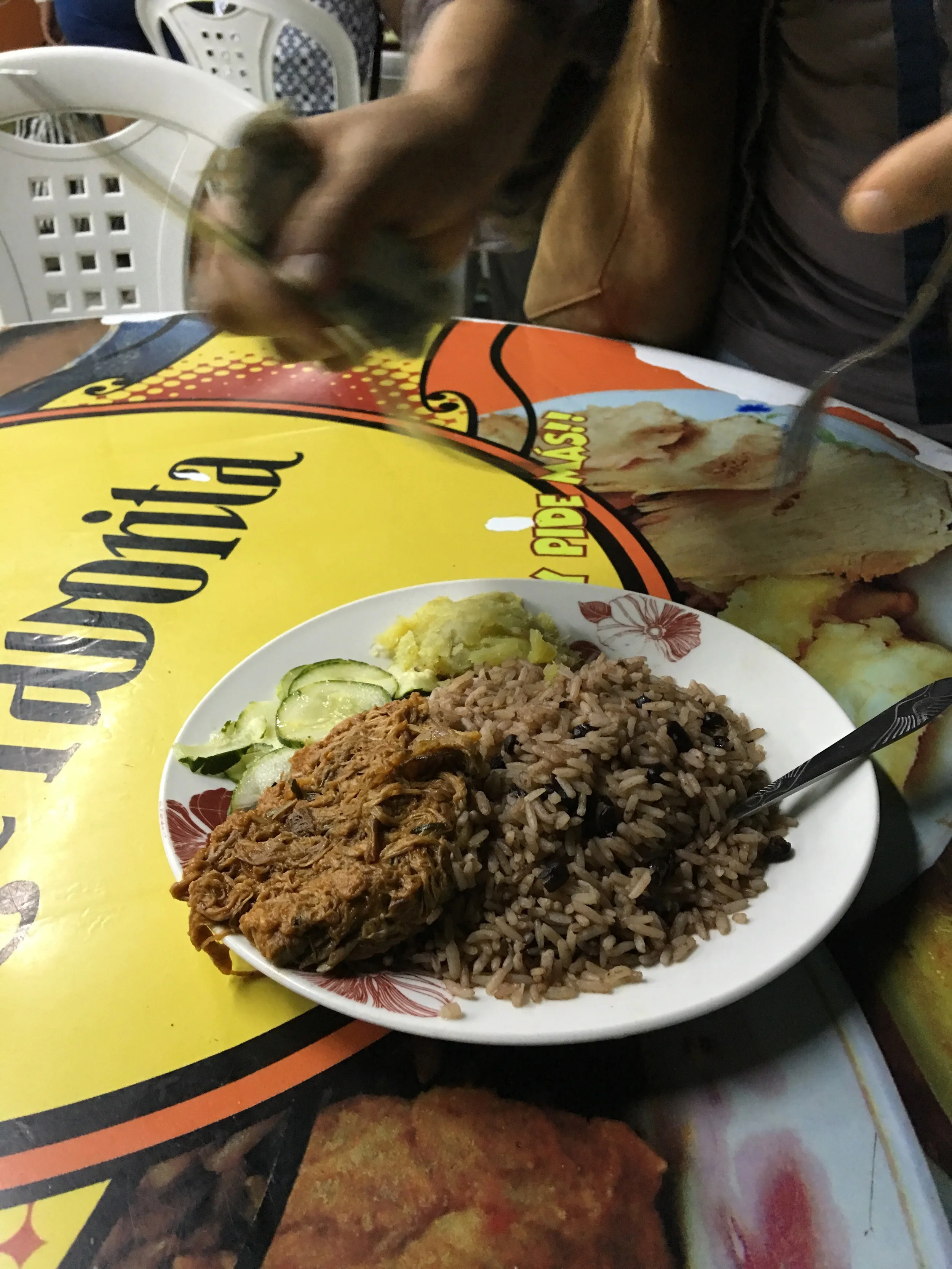


We've been trying government restaurants in our Havana neighborhood. The food is super cheap, but unreliable. Sometimes it's pretty good. Other times, horrible.
Last night's attempt was horrible. (One of the pictures with this post shows the dish we got. You'll know it when you see it.) The restaurant was out of stock on most menu items. Whatever we did order involved an unidentifiable flavorless mass of animal flesh, rice-and-beans (not sure how you fuck up rice and beans) and some mystery side dish.
We couldn't do it.
So we went to check out a privately owned restaurant called 4You, which opened ten days prior.
The decor was brightly lit, cheerful and tasteful (a description you cannot apply to 99.9% of cuban restaurants).
A window at the back of the dining room revealed the tiny kitchen, with three men cooking (actually it was mostly one man cooking and two helping and/or watching).
Everyone in the restaurant took fine dining very seriously. (You can tell how seriously a chef takes his work by how close his face gets to the food he's plating.)
We had an enormous, freshly prepared chicken and rice dish, tricolor fettuchini in a cream sauce, a salad and sautéed vegetables.
It was very good.
The one was the kind of food that should and probably will be phased out over time. The other was the future of Cuban food.
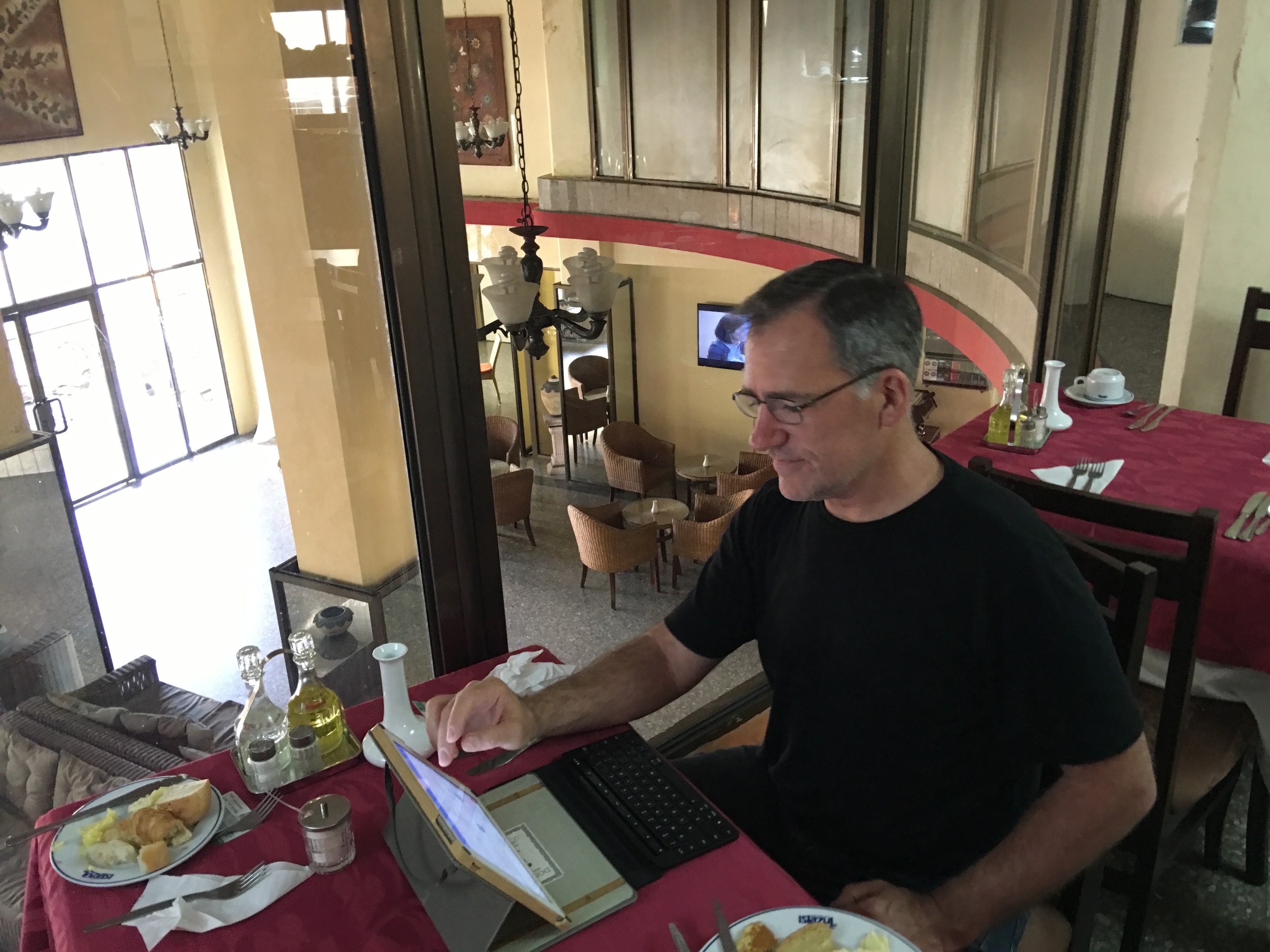
This hotel is at the end of our street. They've got a $6 buffet in the 2nd-floor restaurant and a government WiFi hotspot across the street, which reaches here.
One advantage: bottomless cup of coffee (which is helping me with my chronic caffeine deficiency problem).
The Rolling Stones played in Havana, which is a big deal for Cuba. It's the first such concert ever -- and in fact merely owning a Rolling Stones album or CD was illegal here until recently.
Around a half million people showed up, including us.
It was about an hour and a half walk across Havana to get to the venue. This hike took us through some extremely dilapidated neighborhoods. Havana builders used to obsess with using ancient Roman-style pillars, so it felt like we were walking through an ancient Roman ruin. But people were living in the wrecked buildings.
In the last mile before the concert location, which was Ciudad Deportiva (that sounds to me like "Deportation City," but Amira assures me it means "Sport City") the number of people per square meter continued to grow. And all the buildings across the street from the venue were packed to the rafters -- balconies, porches, and rooftops.
Near the entrance to the venue, something interesting happened (and by interesting I mean terrifying).
Before I describe this part of the story, let me point out that I'm not a big fan of crowds. I normally don't go to concerts, and didn't want to go to this one. But the event was so historic for Cuba, and Amira was so enthusiastic about it, that I agreed to go near it to see before proceeding inside.
Ciudad Deportiva is a huge open field, surrounded by a high fence. They had one entrance that I'm aware of, and military people were frisking (pretending to frisk) people coming into that one narrow entrance (narrow enough so that The Three Stooges couldn't get through it without bumping heads.) Dangerously, the entrance required you to step over a two-foot high cement mini-wall, which you couldn't see because of the dense crowd.
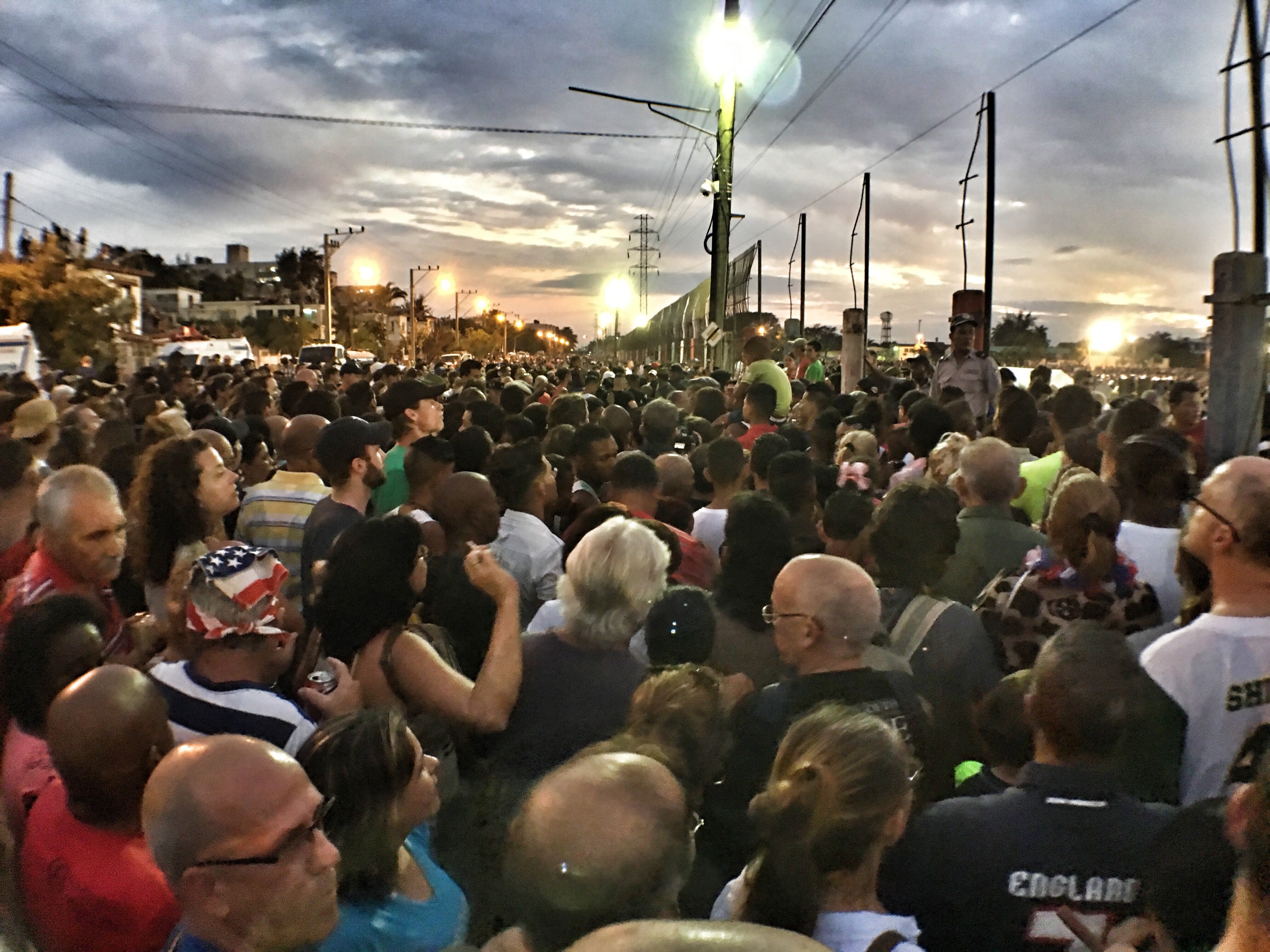
My wild guess is that about 20 people per second were showing up at the periphery of the entrance mob, while the military bouncers were allowing in maybe 3 people per second. So imagine a fence with an entrance, and hundreds of people crammed together in a half circle trying to get in. All the while more people showed up on the periphery of said half circle and, as they did so, the density of people within 30 feet of the entrance grew increasingly high.
We found ourselves in this mob, which continued to get larger and more compressed by the second. Even though we were outside, the air was like the air in a tiny, stuffy room.
As the crowd became more compressed, we found ourselves completely squeezed from all sides by the crowd to the point where it took some effort to physically inhale. Some people started yelling at the soldiers to let people in faster. There were minor altercations and some pushing and shoving but there was literally not an inch of space between all the bodies. We were just one giant mass trying to get in. Some people started freaking out a little.
Kenny was between Amira and me, and Amira was being protected by our new friends, one of whom was an off-duty cop. Kenny was intent on keeping us from being separated, and at some points he reached his gorilla arm over the heads of three or four people to grab my shirt to keep us attached. (Using a colorful Marine Corps phrase, Kenny described the situation as "balls-to-butts.")
It occurred to me that no crowd control was being applied at all. There were no dividing rails or ropes of any kind and therefore no lines to be formed -- no plan other than to let a crowd of any size show up at the entrance, then magnify the bottleneck with security theater.
By the time I was 10 feet from the entrance, I would guess the mob at the gate had grown to about 30,000. A soldier tried to frisk me, but couldn't physically wedge his hands between me and the people surrounding me. While he was still trying, the crowd pushed me, and our cop friend pulled me, and so I managed to get swept (as with a tsunami) past the soldiers and onto the venue grounds inside the fence.
Huge credit goes to Cubans in general, who are easygoing and thick-skinned and not prone to panic.
Once inside, we found a nice place to stand, and the concert started maybe a half hour after we got in.
I guess Cuba isn't a balloon or beach-ball kind of country, so it was inflated condoms that bounced and skimmed over the crowd.
If you want music criticism, I can say that the Stones, well, they're the Stones, and they've still got it.
One of our new friends told us that the sound system was vastly superior to anything ever to exist in Cuba. And the video screens looked amazing (our Mendocino wine guru, John, has a brother who deserves some credit for the quality of the video part of the show, I'm told).
Diehard Stones fans with Rolling Stones t-shirts, signs and other communications media in attendance from Cuba and from all over the world. And there were endless gaggles of teens, tweens, and twenty-somethings who were there just to commingle and party.
It was clear that a huge chunk of us were there for the history including families with children and plenty of grandparents. Just to be at a rock concert in Cuba -- just to be allowed by the Cuban government to assemble for something other than a pro-government rally -- was a massive turning point in post-revolutionary history of Cuba.
As one of our new friends said it so eloquently, "this is an important event for us (Cubans). For 50 years I was forbidden from listening to this music and now this concert is symbolic of new times."
First Obama. Then Jagger. Who's next? Zuckerberg? Everyone here feels like change is coming and that there's no turning back.