
Because that's how we roll on The Provence Experience! - Mike

Meandering Through Our Friend’s Neighborhood in Switzerland
We’ve been enjoying our stay at our wonderful friend Miguel's home in Switzerland. He and his awesome wife and kids live on the outskirts of Zürich — a 20 kilometer train ride from downtown and just a few steps from the lake. Their home location is idyllic!

Our hikes near and on the lake shore have been astonishingly gorgeous with breathtaking Swiss scenery just a short distance from Miguel’s house, including this beautiful chateu. - Amira


The International Language of tomato, basil and mozzarella
We love this dish in California. We've loved it in France, Italy and Spain.
Yesterday, our friend Miguel made it here in Switzerland using tomatoes and basil from his garden, some great mozzarella, organic olive oil and salt.
While he was making this, I happened to be flipping through the cookbook used by all Swiss high school students (Miguel's got a son in high school), and happened upon the book's recipe for tomato, basil and mozzarella. - Mike


The other Swiss cheese
In the US, "Swiss cheese" is a mild alpine cheese with holes in it. (Science only recently found out WHY it has holes.)
But this kind of cheese is made in the US and Canada, and it resembles only one kind of cheese made in Switzerland, namely Emmental cheese.
In reality, Switzerland has a breathtaking variety of cheeses -- which makes sense, given that the country draws heavily from German, French and Italian food cultures and also has its own distinct food culture.
Amira and I visited a wonderful "cheese humidor" in Zurich, and it was cheese heaven.
This is why you have to travel. For the cheese. - Mike


On the beauty of farms
Industrial farms are nasty, ugly, dirty and horrific. But great organic farms are beautiful, clean, dirty and teaming with life.
Near our friend Miguel's house here in Switzerland (near Zurich), there's an organic permaculture farm with an honor system store. It's basically a room full of whatever's ripe and in season, plus some eggs, vinegar, apple juice and even homemade schnapps.
It's a 5-minute walk from Miguel's house, so he can "shop" for ingredients right before making dinner.
Organic farms are not only beautiful, they make life beautiful.
Life is good up in here.


My office today: the train to Switzerland
After a few fun days in Turin, Italy, Amira and I are off to Switzerland to visit our friend, Miguel.
We've got a one-hour layover in Milan, then off to Zurich, or thereabouts. I've got a deadline, so I'm working feverishly on my column.

Burgers abroad on the 4th of July!
Every year Amira and I celebrate the 4th of July with a burger, no matter where we are.
Last year we were in Provence and found a food market with a hamburger food truck. This year, we're in Turin, Italy.
So we hunted down this great burger spot with outdoor seating called 9c Burger And Salad Station.
They have buffalo burgers, so we got two of those; one with sauerkraut and spicy whole-grain mustard and smoked cheese, and the other with local-style goat cheese, Tuscan bacon with home-made barbeque sauce. We shared both. They even make their ketchup in-house from scratch.
Super delicious!
For dessert, we had "apple pie," which was a tarte tatin with vanilla ice cream.
Happy birthday, America!


How to keep it together while traveling abroad
No matter where you go in this big, beautiful world, you'll always need duct tape.
Trouble is, those big, heavy rolls take up space in luggage, especially in carry-on or in everyday carry-around backpacks.
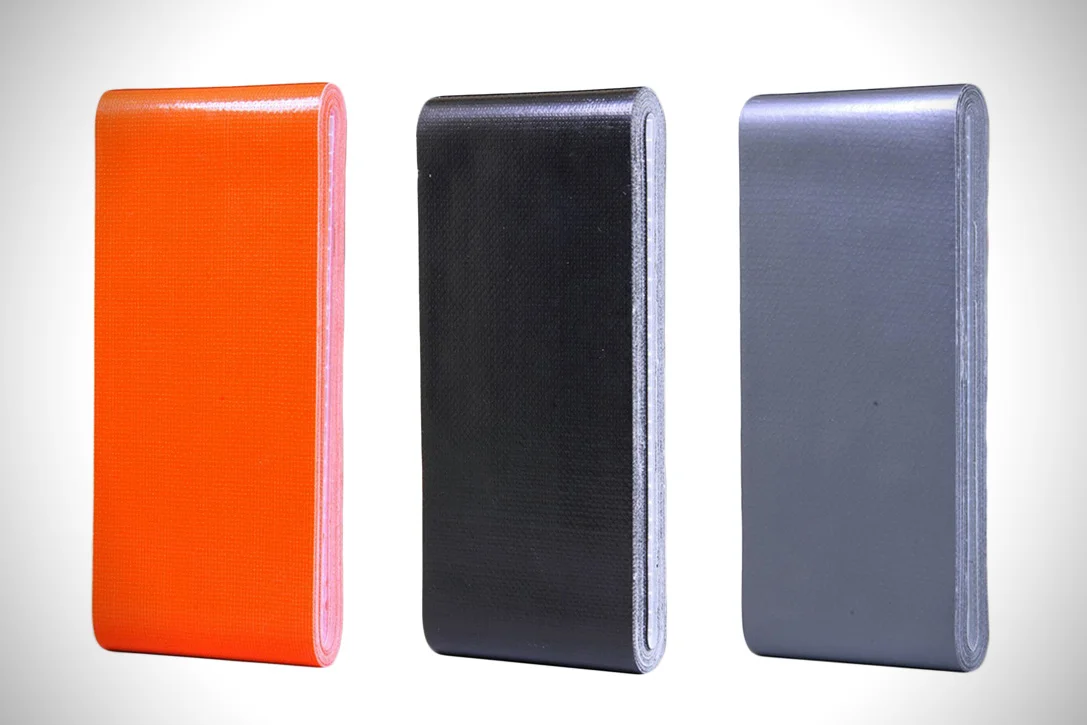
RediTape is a style of duct tape that is wrapped in a thin, pocket-size format. That means it won't take up too much space, and you can even carry it in a small backpack, pocket or purse. (I recommend the 10-pack.)
Here's all the travel gear and products I use and recommend.

What if life was a story and you were the author
What if.

Offline Google Translate Gets Super Smart
One of the most brilliant and necessary resources for travelers is Google Translate, a free app that goes along way toward erasing language barriers.
Two years ago, Google added neural machine translation to Google Translate, which is super advanced computer science that helps make translations more accurate.
I won't bore you with the technical mumbo-jumbo about how all this works (nor do I fully understand it myself). In practice, neural machine translation gives you better translations.
The processing behind nearal machine translation took place on powerful remote Google servers, so you needed an active connection to the internet to use it.
Trouble is, when you're traveling, you're less likely to have such a connection -- or a low-cost connection.
That's why I'm thrilled by the news that Google is bringing neural machine translation to the offline version of Translate -- the advanced processing will take place on your phone even when it's not connected.
My advice: Use Google Translate! And make sure you open the Translate app on your phone in advance and download all the goodies for whatever language you're going to be translating. That's how you get the new capability.
Also note that while the new offline translation is better than the old one thanks to this new feature, it's still not as good as the online version. So use Translate while connected when it's possible or reasonable to do so.
The offline neural machine translation feature will be rolled out for 59 languages over the next few days, so make sure you get it!

Farewell to "them"
Our sense that certain places are "home" and that others are "foreign" or that certain people are "us" and other people are "them" is a powerful delusion.
When you live in enough places around the world, every place becomes "home" and everyone becomes "us."

Here comes a new Prosecco Experience!
Our spectaculiciouis Prosecco Experience ended last week. Our awesome group of Gastronomads partied Italian style, learned to make cheese, tasted the world's greatest grappa, explored mysterious wine cellars, dined in luxurious restaurants, went gastro-hopping by boat through the canals of Venice, learned to make pasta and sampled Italy's most exquisite prosecco (and other wines of the region).
The event was so wonderful that we decided to add a second one this year! The Prosecco Experience Fall 2018 will take place in late October (during the annual wine harvest).
Go here to check it out (and/or sign up!)
You don't want to miss this!

Why not wrap your gear in 'Faraday cages'?
A "faraday cage" is any enclosure that blocks electromagnetic radiation. This includes cellular wireless, WiFi, Bluetooth and RFID signals.
Some people are concerned about the health effects of close proximity to smartphones, which emit strong wireless signals and might be harmful when kept in pants pockets every day for years.
Others worry about wireless hacking, which can include the ability for crooks to hack into your car's key fob and start your car in the driveway, the theft of credit card information from your wallet or wireless hacking of your phone or laptop.
And still others worry about location tracking, whereby your wireless carrier can sell real-time access to your location to many companies.
Another common problem for nomads is that while abroad, you often pay by the megabyte for any data that's downloaded over the cell network while you're between free WiFi hotspots. This can include Google Photos backing up your giant videos, or even security updates pushed down by the OS company.
And I've discovered that on many WiFi networks, the quality of the signal is conspicuously related to the number of devices connected to the network. People can struggled on slow networks with their laptop, without realizing that their unused phone and tablet are slowing the network just by remaining connected.
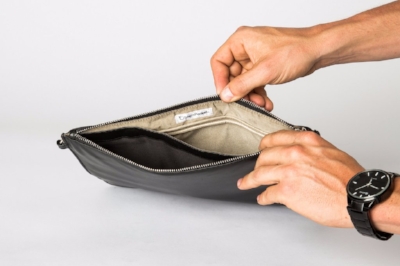
A company called Silent Pocket solves all these problems with zero effort on your part. They specialize in laptop bags, wallets, purses, smartphone cases, dry bags and other products that function as "faraday cages" -- wireless signals can't get in or out of these accessories. No radiation, hacking, tracking, unwanted data costs or unwanted network access.


Another way to carry a keyboard
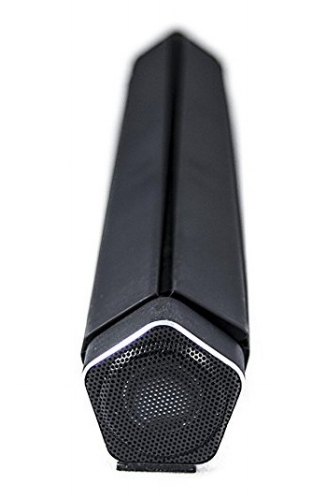
This $80 mobile keyboard, called the TekNmotion Rollable Bluetooth Keyboard & Speaker, rolls up into a tiny cylinder and connects via Bluetooth to any iOS or Android device.
Best of all, it also has built-in speakers.
It comes out July 1, but you can pre-order it now.

Who says you can't take it with you?
Designer Marc Sadler designed a line of suitcases called the Bank Collection for Fabbrica Pelletterie Milano that let you bring the amenities of home on the road with you.
My favorite is a "Cookstation," which is a complete kitchen in a suitcase. The luggage contains a refrigerator, stove, cutting board, plus drawers for knives, pots, pans and more.

When traffic gets ba-a-a-a-a-a-a-a-a-d
Our Prosecco Experience is less than a week away. We're driving around making last-minute arrangements. The drive is always beautiful, and the only traffic jams we encounter involve livestock.

How to really get away from it all
A startup called Slow Cabins offers nomads something many crave: isolation and anonymity.
They rent isolated, off-the-grid cabins in out-of-the-way places in Belgium. (This isn't like AirBnB, where the site brokers rental rentals between hosts and guests — Slow Cabins built, owns and maintains the cabins.)
Their cabins are small, solar powered and by default have no internet connectivity. Go here to see all the pictures.
The cabins are rented in three categories: For couples, families and work groups. They feature rainwater collection systems, dry toilets and wood stoves for cooking and heat.
As a feature, they won't even tell you where the cabin is you're renting until you've already made the reservation.
It's not cheap, though. Their cheapest package (for couples) costs around $215 per night, with a minimum stay of two nights. Dinner and breakfast are extra.
Slow Cabins is working on expanding into other European countries.
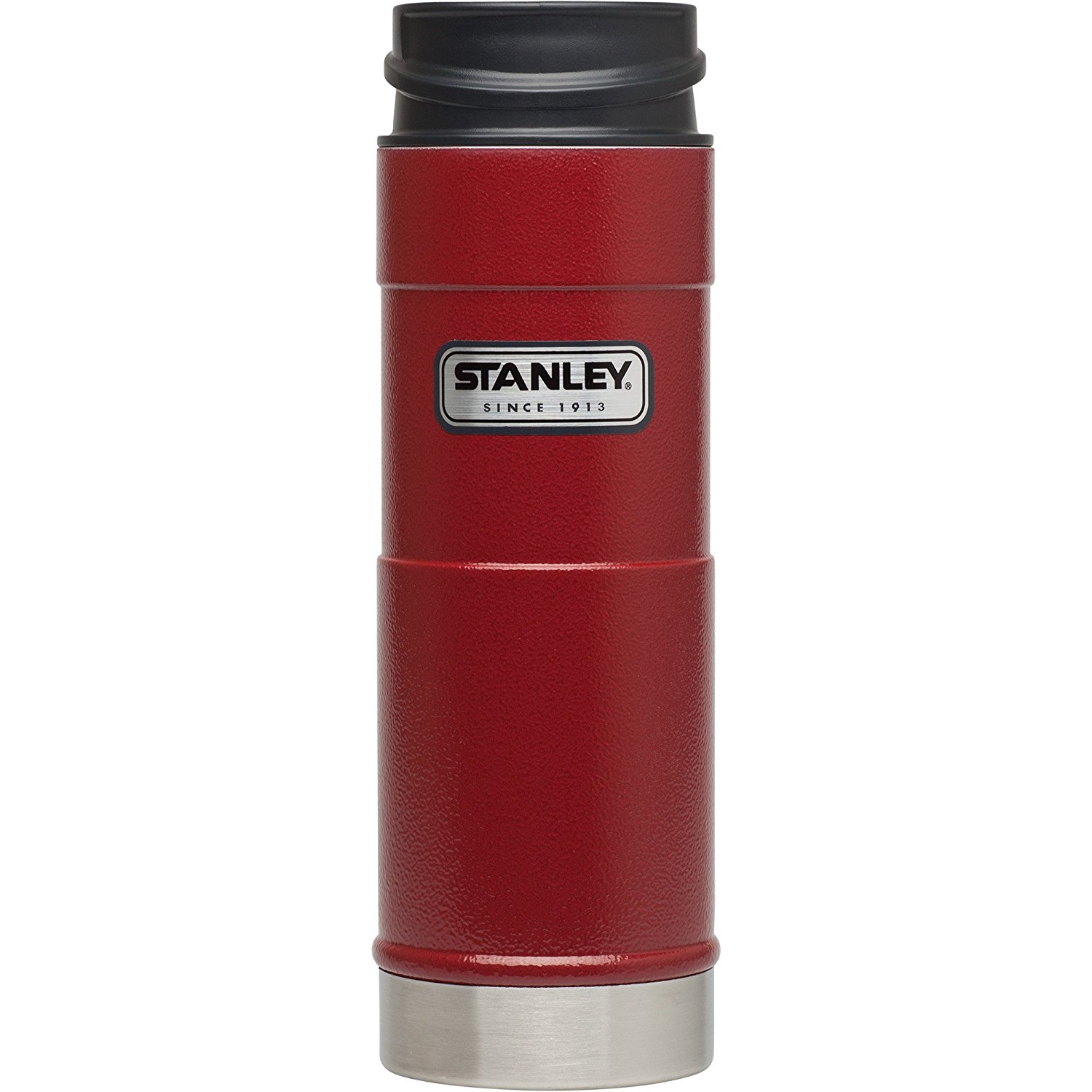
Why I bought a Stanley thermos
I just bought a thermos called the Stanley Classic One Hand Vacuum Mug.
The main reason is that it's the only thermos I'm aware of that both fits in a standard car cup holder, and also has a mouth wide enough to accommodate my Aeropress coffee maker. The Aeropress fits well enough in the top, which means I can make coffee directly into the thermos.
These sound like insignificant features, but for me, they're very important. As we travel around the world, we stay in arbitrary housing, often AirBnB houses, apartments or even rooms. These usually have kitchens with all the trimmings. But sometimes they don't. I find myself having to make my own coffee using whatever equipment I brought with me. It's really great to be able to make coffee directly into a thermos, which I can then take. Without the direct brewing, I would have to find some other vessel to make the coffee in, then somehow transfer it without spilling.
We often rent a car to drive around and explore. It's usually hard to find a reasonable place to get coffee, and it can be time-consuming to park. Coffee can be expensive to buy. Many countries don't have the culture of taking coffee "to go." And American-style drive-thru windows are exceedingly rare abroad. As a result of all this, a simple cup of coffee can require 15 minutes finding parking, a 10 minute walk, a 15 minute wait for the waiter, followed by another 15 minutes for the coffee. Because one weak shot of espresso doesn't cut it (I am a writer, after all), it often costs more than $6 or $8 for the coffee, plus a tip. Then, another 10 minute slog back to the car.
Amira doesn't drink coffee. So I'm not only enduring this, but imposing it all on her.
A thermos that enables me to make coffee directly into the thermos, then have hot coffee with me all day saves big time and money.
Stanley thermi are pretty good quality, but not the best. For example, the Zojirushi SM-KHE48AG Stainless Steel Mug is higher quality from a materials and fit-and-finish point of view.
Their abilities to retain heat are comparable.
The Stanley thermos is a beast; the kind of thing that might be used by a building contractor who drives a Ford F-150 pickup truck. The Zojirushi is the kind of thermos that might be used by a financial analyst who drives an Infiniti Q50 sedan.
But while the Zojirushi and many other such products do fit in cup holders, they don't allow making coffee directly into the thermos with an Aeropress. And that's a deal-breaker.
With the Stanley full of coffee, and the lid on, you can turn it upside down and shake, and literally zero drops of coffee comes out. You press and hold the button at the back while taking a drink. When you let go, and turn it upside down again, zero coffee drips out. You can drop it, throw it and do anything with it, and no coffee gets spilled. It's pretty amazing.
I've not only bought this thermos, but added it to my list of gear on the Gastronomad Gear page. I highly recommend this product to anyone who uses an Aeropress.

This is my idea of an 'open-plan office'
An "open-plan office" is where employees aren't given offices or even cubicles, but instead work on desks in a big, open room.
Someone on Twitter pointed out that...
"Open-plan offices have been found to reduce productivity and impair memory. They’re associated with high staff turnover. They make people sick, hostile, unmotivated, and insecure. Open-plan workers are more likely to argue more with their colleagues."
I think of a spectrum of productivity scenarios ranging from the "open-plan office" on one end of the spectrum, and being in the middle of an Italian vineyard on the other. That's MY idea of an "open-plan office"

How to spend way less on airfare
(Or.... how to spend the same amount on more flights!)
Buying airplane tickets is unlike any other purchase we make. The reason is that the price we pay varies more than any other thing we buy. You might pay $1,200 for a flight and sit next to a person who paid $375 for the same flight.
If you travel a lot, or far, it's a worthy investment to learn how to pay less. Because you can pay a lot less for the exact same "product."
But learning how it all works can be super complicated and time consuming. So I have two simple pieces of advice for getting the lowest airfare.
First, read this wonderful post on CheapAir.com, which is information based on the very good CheapAir.com 2018 Annual Airfare Study. It focuses on when to buy, which should help you maximize your chances of grabbing the best airfare.
The second piece of advice is to use Google Flights, which builds in intelligence about airfares, and even makes predictions about when and where to get the best flights.
The most basic use of Google Flights is that you can enter the departure and destination, then get a list of flights from least to most expensive. You can then fiddle with the airports, timing and so on to troubleshoot getting the best flight.
One tip for using Google Flights is to be vague about the arrival city. If the flight is long and the airfare expected to be expensive, choose the entire country. Google Flights will show you all the airports in that country with their cheapest flights. That means you can choose the arrival airport based on the price of the ticket.
Once you arrive, you can take a train or bus to the destination of your choice. By taking a $20 bus, you might save $2,000 on the flight.
Same goes for the departure city. We once took a bus from Marseille to Venice in order to depart from the Venice Airport and save more than a thousand dollars on the flight.
You don't have to know everything in the world about how airline pricing works to get the best fare. You only need to know everything in the world about Google Flights.