
What if.

Offline Google Translate Gets Super Smart
One of the most brilliant and necessary resources for travelers is Google Translate, a free app that goes along way toward erasing language barriers.
Two years ago, Google added neural machine translation to Google Translate, which is super advanced computer science that helps make translations more accurate.
I won't bore you with the technical mumbo-jumbo about how all this works (nor do I fully understand it myself). In practice, neural machine translation gives you better translations.
The processing behind nearal machine translation took place on powerful remote Google servers, so you needed an active connection to the internet to use it.
Trouble is, when you're traveling, you're less likely to have such a connection -- or a low-cost connection.
That's why I'm thrilled by the news that Google is bringing neural machine translation to the offline version of Translate -- the advanced processing will take place on your phone even when it's not connected.
My advice: Use Google Translate! And make sure you open the Translate app on your phone in advance and download all the goodies for whatever language you're going to be translating. That's how you get the new capability.
Also note that while the new offline translation is better than the old one thanks to this new feature, it's still not as good as the online version. So use Translate while connected when it's possible or reasonable to do so.
The offline neural machine translation feature will be rolled out for 59 languages over the next few days, so make sure you get it!

Farewell to "them"
Our sense that certain places are "home" and that others are "foreign" or that certain people are "us" and other people are "them" is a powerful delusion.
When you live in enough places around the world, every place becomes "home" and everyone becomes "us."

Here comes a new Prosecco Experience!
Our spectaculiciouis Prosecco Experience ended last week. Our awesome group of Gastronomads partied Italian style, learned to make cheese, tasted the world's greatest grappa, explored mysterious wine cellars, dined in luxurious restaurants, went gastro-hopping by boat through the canals of Venice, learned to make pasta and sampled Italy's most exquisite prosecco (and other wines of the region).
The event was so wonderful that we decided to add a second one this year! The Prosecco Experience Fall 2018 will take place in late October (during the annual wine harvest).
Go here to check it out (and/or sign up!)
You don't want to miss this!

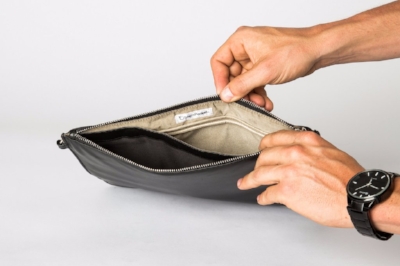
Why not wrap your gear in 'Faraday cages'?
A "faraday cage" is any enclosure that blocks electromagnetic radiation. This includes cellular wireless, WiFi, Bluetooth and RFID signals.
Some people are concerned about the health effects of close proximity to smartphones, which emit strong wireless signals and might be harmful when kept in pants pockets every day for years.
Others worry about wireless hacking, which can include the ability for crooks to hack into your car's key fob and start your car in the driveway, the theft of credit card information from your wallet or wireless hacking of your phone or laptop.
And still others worry about location tracking, whereby your wireless carrier can sell real-time access to your location to many companies.
Another common problem for nomads is that while abroad, you often pay by the megabyte for any data that's downloaded over the cell network while you're between free WiFi hotspots. This can include Google Photos backing up your giant videos, or even security updates pushed down by the OS company.
And I've discovered that on many WiFi networks, the quality of the signal is conspicuously related to the number of devices connected to the network. People can struggled on slow networks with their laptop, without realizing that their unused phone and tablet are slowing the network just by remaining connected.
A company called Silent Pocket solves all these problems with zero effort on your part. They specialize in laptop bags, wallets, purses, smartphone cases, dry bags and other products that function as "faraday cages" -- wireless signals can't get in or out of these accessories. No radiation, hacking, tracking, unwanted data costs or unwanted network access.


Another way to carry a keyboard
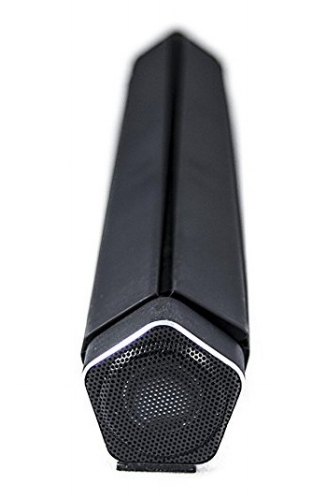
This $80 mobile keyboard, called the TekNmotion Rollable Bluetooth Keyboard & Speaker, rolls up into a tiny cylinder and connects via Bluetooth to any iOS or Android device.
Best of all, it also has built-in speakers.
It comes out July 1, but you can pre-order it now.

Who says you can't take it with you?
Designer Marc Sadler designed a line of suitcases called the Bank Collection for Fabbrica Pelletterie Milano that let you bring the amenities of home on the road with you.
My favorite is a "Cookstation," which is a complete kitchen in a suitcase. The luggage contains a refrigerator, stove, cutting board, plus drawers for knives, pots, pans and more.

When traffic gets ba-a-a-a-a-a-a-a-a-d
Our Prosecco Experience is less than a week away. We're driving around making last-minute arrangements. The drive is always beautiful, and the only traffic jams we encounter involve livestock.

How to really get away from it all
A startup called Slow Cabins offers nomads something many crave: isolation and anonymity.
They rent isolated, off-the-grid cabins in out-of-the-way places in Belgium. (This isn't like AirBnB, where the site brokers rental rentals between hosts and guests — Slow Cabins built, owns and maintains the cabins.)
Their cabins are small, solar powered and by default have no internet connectivity. Go here to see all the pictures.
The cabins are rented in three categories: For couples, families and work groups. They feature rainwater collection systems, dry toilets and wood stoves for cooking and heat.
As a feature, they won't even tell you where the cabin is you're renting until you've already made the reservation.
It's not cheap, though. Their cheapest package (for couples) costs around $215 per night, with a minimum stay of two nights. Dinner and breakfast are extra.
Slow Cabins is working on expanding into other European countries.
Why I bought a Stanley thermos
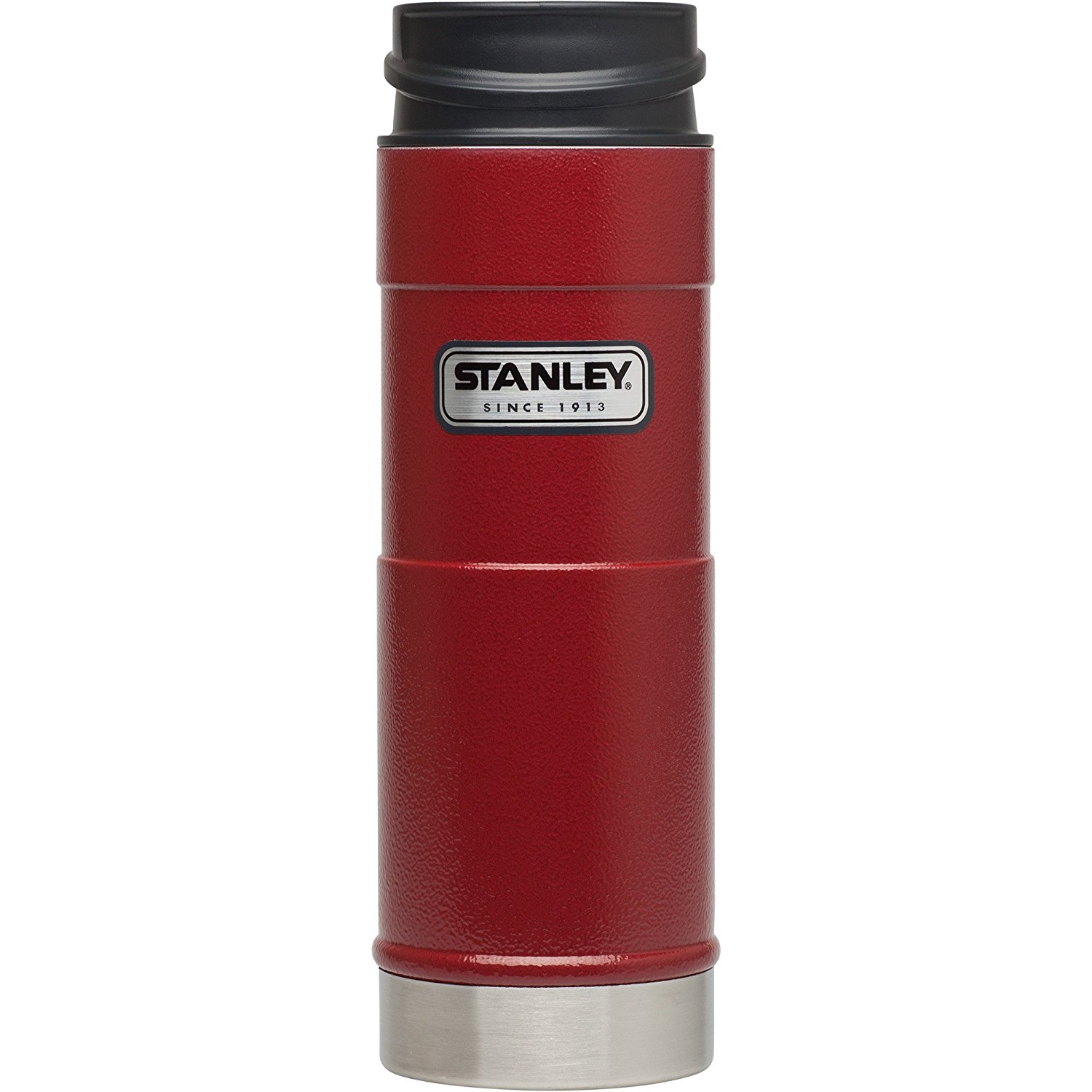
I just bought a thermos called the Stanley Classic One Hand Vacuum Mug.
The main reason is that it's the only thermos I'm aware of that both fits in a standard car cup holder, and also has a mouth wide enough to accommodate my Aeropress coffee maker. The Aeropress fits well enough in the top, which means I can make coffee directly into the thermos.
These sound like insignificant features, but for me, they're very important. As we travel around the world, we stay in arbitrary housing, often AirBnB houses, apartments or even rooms. These usually have kitchens with all the trimmings. But sometimes they don't. I find myself having to make my own coffee using whatever equipment I brought with me. It's really great to be able to make coffee directly into a thermos, which I can then take. Without the direct brewing, I would have to find some other vessel to make the coffee in, then somehow transfer it without spilling.
We often rent a car to drive around and explore. It's usually hard to find a reasonable place to get coffee, and it can be time-consuming to park. Coffee can be expensive to buy. Many countries don't have the culture of taking coffee "to go." And American-style drive-thru windows are exceedingly rare abroad. As a result of all this, a simple cup of coffee can require 15 minutes finding parking, a 10 minute walk, a 15 minute wait for the waiter, followed by another 15 minutes for the coffee. Because one weak shot of espresso doesn't cut it (I am a writer, after all), it often costs more than $6 or $8 for the coffee, plus a tip. Then, another 10 minute slog back to the car.
Amira doesn't drink coffee. So I'm not only enduring this, but imposing it all on her.
A thermos that enables me to make coffee directly into the thermos, then have hot coffee with me all day saves big time and money.
Stanley thermi are pretty good quality, but not the best. For example, the Zojirushi SM-KHE48AG Stainless Steel Mug is higher quality from a materials and fit-and-finish point of view.
Their abilities to retain heat are comparable.
The Stanley thermos is a beast; the kind of thing that might be used by a building contractor who drives a Ford F-150 pickup truck. The Zojirushi is the kind of thermos that might be used by a financial analyst who drives an Infiniti Q50 sedan.
But while the Zojirushi and many other such products do fit in cup holders, they don't allow making coffee directly into the thermos with an Aeropress. And that's a deal-breaker.
With the Stanley full of coffee, and the lid on, you can turn it upside down and shake, and literally zero drops of coffee comes out. You press and hold the button at the back while taking a drink. When you let go, and turn it upside down again, zero coffee drips out. You can drop it, throw it and do anything with it, and no coffee gets spilled. It's pretty amazing.
I've not only bought this thermos, but added it to my list of gear on the Gastronomad Gear page. I highly recommend this product to anyone who uses an Aeropress.

This is my idea of an 'open-plan office'
An "open-plan office" is where employees aren't given offices or even cubicles, but instead work on desks in a big, open room.
Someone on Twitter pointed out that...
"Open-plan offices have been found to reduce productivity and impair memory. They’re associated with high staff turnover. They make people sick, hostile, unmotivated, and insecure. Open-plan workers are more likely to argue more with their colleagues."
I think of a spectrum of productivity scenarios ranging from the "open-plan office" on one end of the spectrum, and being in the middle of an Italian vineyard on the other. That's MY idea of an "open-plan office"

How to spend way less on airfare
(Or.... how to spend the same amount on more flights!)
Buying airplane tickets is unlike any other purchase we make. The reason is that the price we pay varies more than any other thing we buy. You might pay $1,200 for a flight and sit next to a person who paid $375 for the same flight.
If you travel a lot, or far, it's a worthy investment to learn how to pay less. Because you can pay a lot less for the exact same "product."
But learning how it all works can be super complicated and time consuming. So I have two simple pieces of advice for getting the lowest airfare.
First, read this wonderful post on CheapAir.com, which is information based on the very good CheapAir.com 2018 Annual Airfare Study. It focuses on when to buy, which should help you maximize your chances of grabbing the best airfare.
The second piece of advice is to use Google Flights, which builds in intelligence about airfares, and even makes predictions about when and where to get the best flights.
The most basic use of Google Flights is that you can enter the departure and destination, then get a list of flights from least to most expensive. You can then fiddle with the airports, timing and so on to troubleshoot getting the best flight.
One tip for using Google Flights is to be vague about the arrival city. If the flight is long and the airfare expected to be expensive, choose the entire country. Google Flights will show you all the airports in that country with their cheapest flights. That means you can choose the arrival airport based on the price of the ticket.
Once you arrive, you can take a train or bus to the destination of your choice. By taking a $20 bus, you might save $2,000 on the flight.
Same goes for the departure city. We once took a bus from Marseille to Venice in order to depart from the Venice Airport and save more than a thousand dollars on the flight.
You don't have to know everything in the world about how airline pricing works to get the best fare. You only need to know everything in the world about Google Flights.

Foodie find in the middle of nowhere
When we’re not galavanting some place in this beautiful big world, we often drive from Santa Barbara to Silicon Valley and vice versa. Over years, it’s become a wonderful and must do drive with beautiful scenery most of the way with some great foodie spots worthy of stopping to eat along the way.
One of our favorite bakeries in California is Bob’s Well Bread in the charming town of Los Alamos where we often stop to enjoy a delicious brunch or just pick up a couple of European style sandwiches.
Bob’s bread is really good and the French pastries are some of the best I’ve had in the US! The grounds are pretty fun to visit with the awesome outdoor sitting to dine al fresco. They often have the woodfired oven going and you can enjoy fresh focaccia right out of the oven!
If you take a road trip between Los Angeles or Santa Barbara and San Francisco (and you should!), do yourself a favor and treat yourself to Bob’s Well Bread Bakery! Chances are you’ll see the master baker, Bob, behind the counter.
His Euro sandwiches are phenomenal, too!
Hot tip: plan on going as early as possible to enjoy a glazed morning bun! Soooo delicious!
(Note that they’re closed Tuesday and Wednesday! Bob also has cottages for rental in the same town! Check out his website.)
There are other cool places in or near Los Alamos for a mini Gastronomad weekend! Stay tuned, we’ll share more later.

Chinese nomads shut down by killjoy government


Two young Chinese creatives, Gao Zhen and Ting Ting, decided to take a year off work and do the whole #VanLife thing traveling 27,962 miles across China.
They spent three months customizing the van, adding a bed, wood floor, mini kitchen, insulation and rugged tires. The van looks amazing. And so do their adventures (they're professional photographers and videographers, so they know what they're doing in the visuals department).
Instead of Instagramming their adventures, they posted on China's own Weibo social network.
Their Weibo account was a hit, garnering 672,000 followers.
Sadly, their fame won the attention of the killjoy government, which ruled their van illegal.
"All modifications must be done under the premise that it’s safe and legal,” the China’s ministry of public security traffic said in a statement.
Also, they were told they needed to get approval from local authorities to change the color of their van.
China is not a free country.
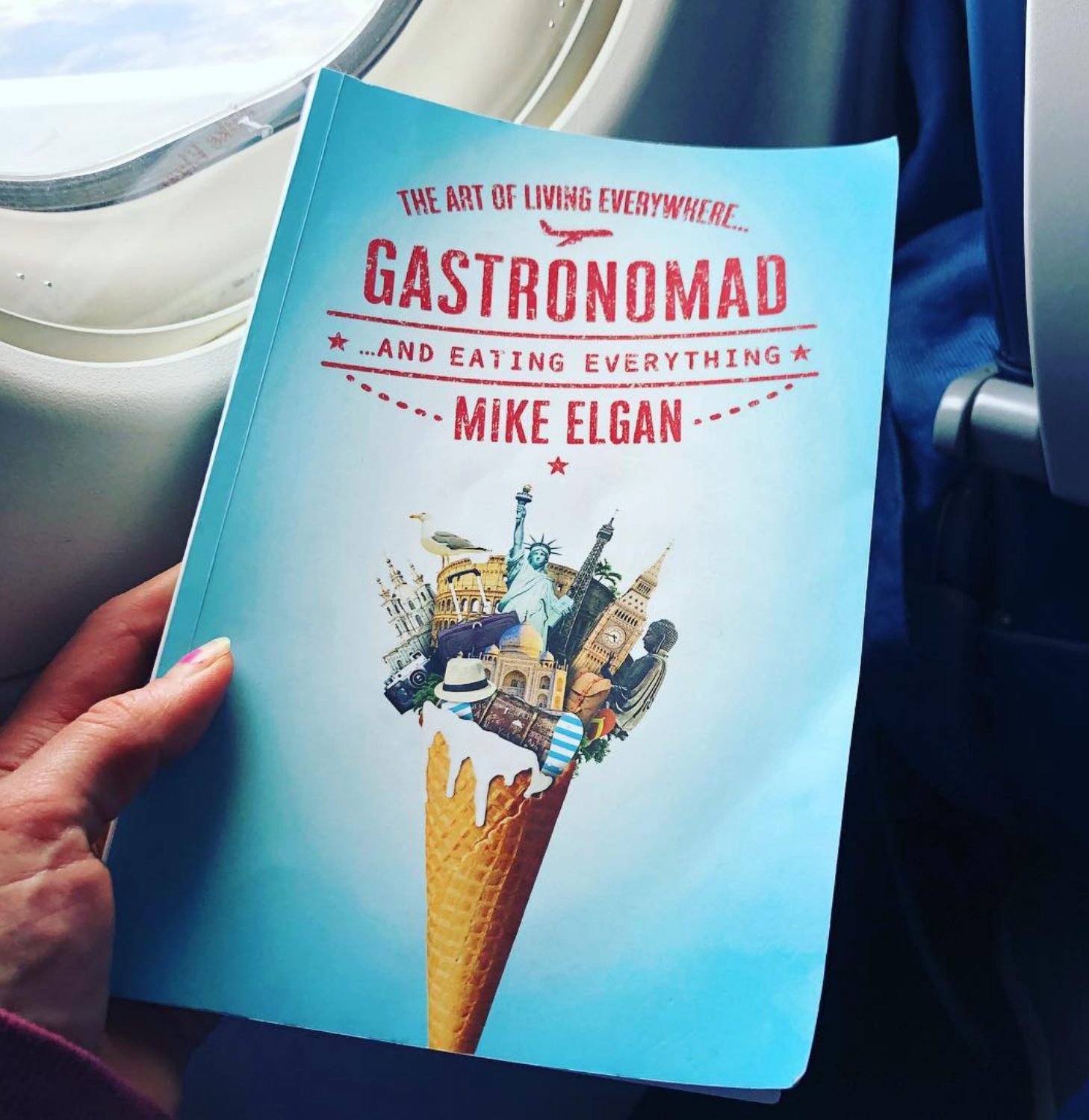
GASTRONOMAD: Don't Leave Home Without It!
Gastronomads Adam & Chelsea Curry posted this awesome picture of my book on Instagram. They read it "cover to cover" on a round-trip flight while they prepare for a 9-month adventure of global travel! Love it!

Traveling with wine and cheese (the only way to fly)!
We're always schlepping bottles around, it seems. As we travel, we discover some bottled something or other that we'd like to share with people somewhere else, so we pack it up in our luggage and protect the bottles by wrapping them in our own clothes.
When we travel from California to Europe, we bring stuff like maple syrup and California wine. When we travel from Europe to anywhere else, we pack olive oil, truffle oil and, of course, as much wine as we can pack.
I talked to a winemaker in Italy who had recently traveled to New York City, and I asked her how she traveled with bottles of wine. Surely, as an experienced professional, she had some great method or special suitcase.
Nope. She packs the bottles in her checked bag wrapped in clothing.
I was happy to learn that Alaska Airlines now offers a program called Wine Flies Free for their Mileage Plan members whereby they can check a 12-bottle case of wine for free. (Normally their fee is $25, which is reasonable.) This deal applies on Alaska Airlines, Horizon Air and SkyWest flights between specific airports.
It's a wonderfully gastronomad-friendly policy, and I hope it's a trend.
My advice is to ask the airline you're flying on what the rules are for checking items like cases of wine -- both the airline rules and the customs rules.
Also, I was shocked to learn upon entry to the Oakland Airport that it's perfectly legal to carry cheese into the US from Europe. The TSA has a long list of foods they frown upon, which include anything with meat or any kind of produce. But cheese isn't on the list!
If I had known this, I would have checked in a giant parmesan wheel, at least.

Just got back from the Prosecco Hills
It was a "work" trip, prepping for The Prosecco Experience, and we had a truly wonderful time with all our friends there. (Picture by fellow Gastronomad Erica (a.k.a. @ciccisbrigisinlove on Instagram).

How to taste this earthshaking "amber" wine
I just tasted the most astonishing wine.
Dry and caramely, it reminded me of the best whisky I’ve ever tried. It's so rare to taste a wine that's not only conspicuously excellent, but completely different.
It was made by one of the world's greatest and most visionary winemakers. She calls it an "amber" wine.
Her wines are not exported outside of Italy. You can only find them here in the Prosecco Hills. She only made 600 bottles of this "amber" wine.
Her white wines are incredible. Her reds are divine. And her Prosecco -- forget about it. It tastes unlike any Prosecco you've ever encountered.
Our Prosecco Experience group will taste this amazing "amber" wine, and several others. With the winemaker. In her home. On top of a hill of her vineyards overlooking a valley of incomparable beauty.
There is only one way to get to know this brilliant winemaker and try this exclusive wine: With us! Only one couple spot left for our Prosecco Experience!
Like Uber, but for international package delivery
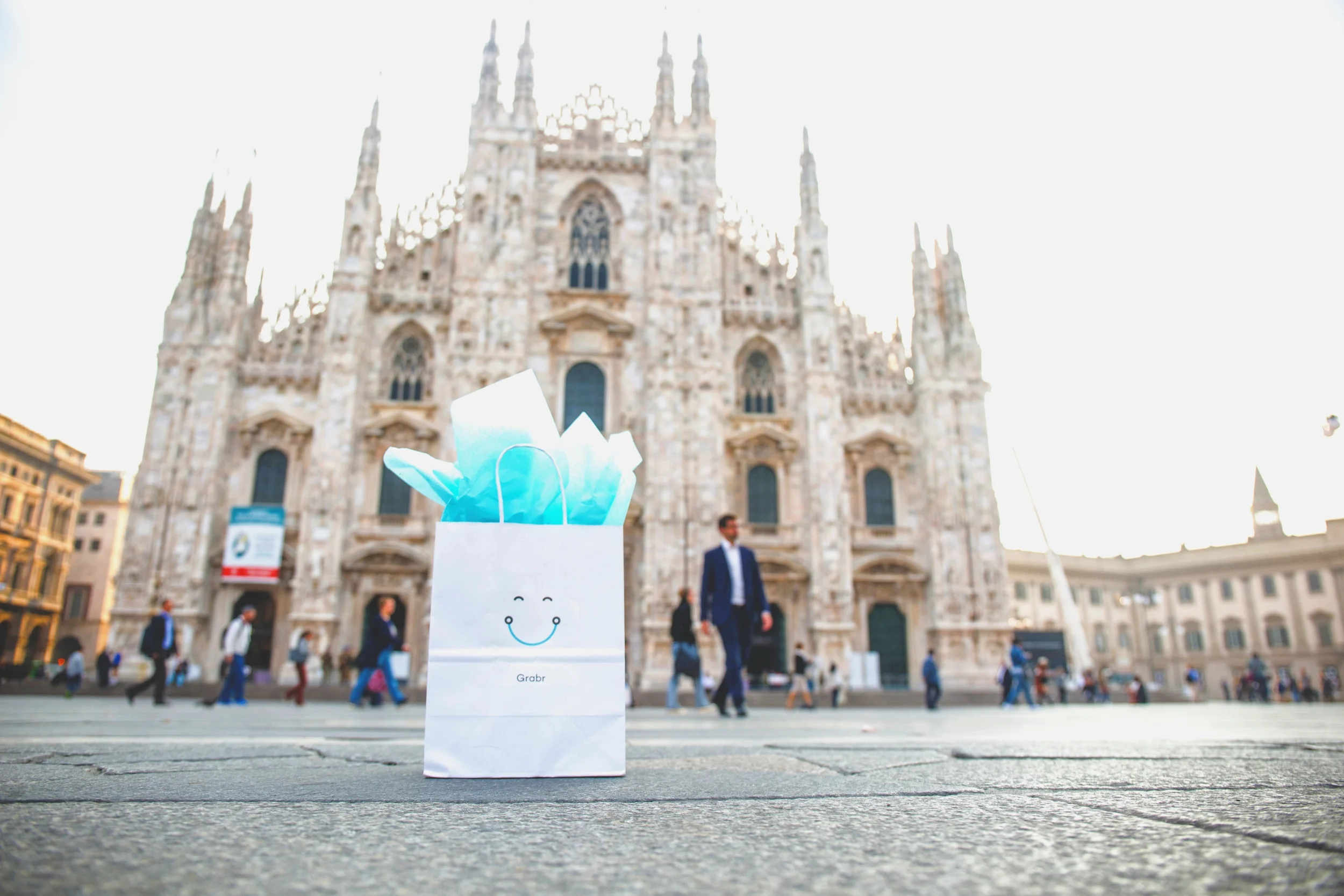
A new service calls Grabr connects people abroad who need things from their home country with fellow travelers willing to bring it to them. (For a fee of a few bucks.)
It's like a reputation-based peer-to-peer courier service. Or maybe it's like Uber, but for package delivery.
When my iPhone got stolen in Spain last year, I sent for another one, which took too long and which subjected me to paying a massive fee levied by the Spanish government. It arrived after I left Spain and had to be sent back to the US. Long story short: The international mail system can fail to get you what you want when you want it.
Maybe Grabr can do better.
Our Island in Provence
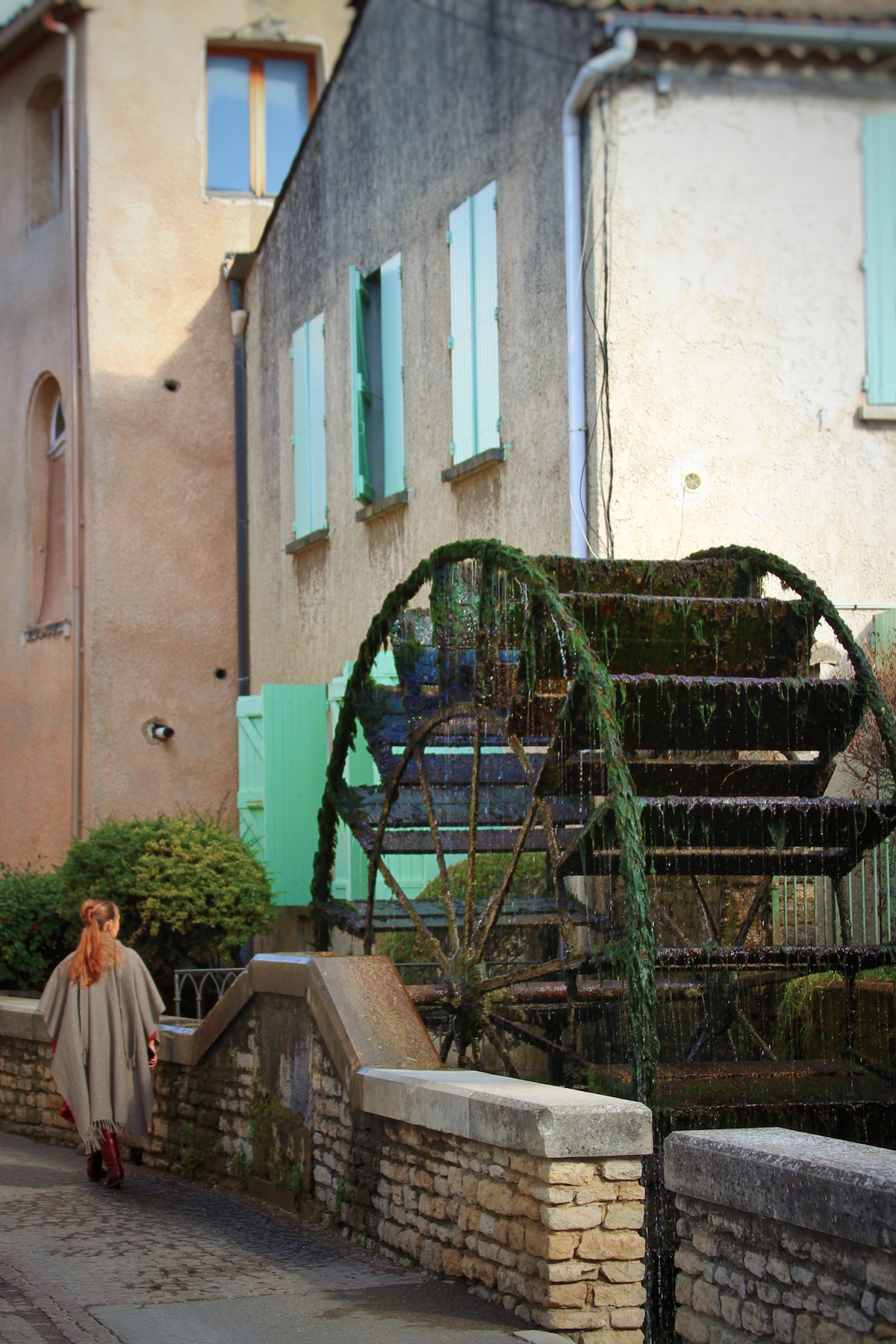
Our home in Provence in recent weeks has been a 300-year-old house in the tiny village of L'Isle-sur-la-Sorgue.
L'Isle-sur-la-Sorgue translates as: "The Island on the Sorgue." (The Sorgue river splits in two, then re-joins into one. The resulting "island" is run through with channels and waterways.)
Because the Sorgue originates at a natural spring, the water is always clean and pure and a constant 55 degrees F.
Large paddle wheels are turning all over the village. They were first built in the 12th Century to grind wheat, but later for processing wool and silk. Two large wheels turn day and night on either side of our front door.
The village is best known for antique shops. It's also a wonderful place to sit at a cafe and enjoy the view -- there's always a view of the rushing water.
We don't have a lot of time to sit at cafes, however. We're very busy making the final arrangements for our upcoming Provence Experience, and also visiting with friends. (Last night we had our third dinner in four days.) It’s the gastronomad way!