• Experiences
  • Testimonials
  • Blog
  • Newsletter
  • FAQ
  • About
Menu

Gastronomad

Immersive culinary travel experiences
  • Experiences
  • Testimonials
  • Blog
  • Newsletter
  • FAQ
  • About
italy.jpg

A glorious and surreal return to Italy

September 22, 2021

We just spent a few weeks in Italy after two years away. It was glorious. And surreal.

We spent time in Venice and the Veneto region visiting old friends and meeting new ones, exchanging stories of loss, pain, devastation, survival and the silver linings we all found in the clouds.

Wandering aimlessly through the labyrinthine alleys and canals of Venice without the normal throngs of foreign tourists was like going back in time. The canals still looked pretty clean and the nights were quiet — a rare, probably once-in-a-lifetime experience.

But it didn’t last. By the time we left weeks later, Venice got crowded again with visitors from all over the world. The spike was driven both by easing or clarified travel restrictions, plus the one-two punch of a Dolce Gabbana fashion show and Venice Cinema Week.

Venice was extra festive and interesting with all the fashion and film goings-on, which attracted all kinds of celebrities, including Jennifer Lopez and Ben Affleck. It felt like Venice was on the cusp of returning to its normal hustle and bustle of pre-pandemic times.

Venice was so crowded, we wore masks even outdoors in the narrow streets.

After hosting The Prosecco Experience, which just ended a week ago Saturday, we’re feeling restored, inspired and filled with hope.

More than ever, we are proud to say that The Gastronomad Experience is not only the most joyful way to travel, but also far safer than traveling on your own — with or without a pandemic.

Covid tested our resilience and turned what would have been our best year into our worst. We have mourned the loss of people and have shared the sadness of friends whose marriages ended during the stress of a horribly painful pandemic. Restaurants, bakeries and cafes we used to love have permanently gone out of business. Prices for everything have gone up, making travel more expensive than ever before.

Still, though we’re all still facing a world fractured by a devastating pandemic, it’s important to celebrate every small victory, and life itself. And there’s nothing that brings more lasting joy and happiness than sojourning in faraway lands, exploring other landscapes and eating and drinking local foods and wine.

Joy and gratitude are the best antidotes for pain and suffering and something we can all cultivate. Exploring the world, learning from other cultures, tasting local cuisines and wine at their place of origin with locals while enjoying breathtaking views in the world’s most beautiful places is good medicine for the soul. It’s what nourishes our curious minds and our wandering souls.

Above all, it’s the people who sign up for Gastronomad Experiences that renew our spirits. These are formidable people with open minds and open hearts. They trust us despite, the limited information we share about the Experience to come. (Our activities remain secret so we can surprise you every day.)

Our trip to Italy was poignant and surreal, but on balance filled with joy, hope and the happiness that always comes from great food, amazing wine, stunning landscapes and, above all, love and friendship around a table.

Tags Italy, Prosecco, Experience, Joy

Wow! The scenery in the Prosecco Hills!

September 1, 2021

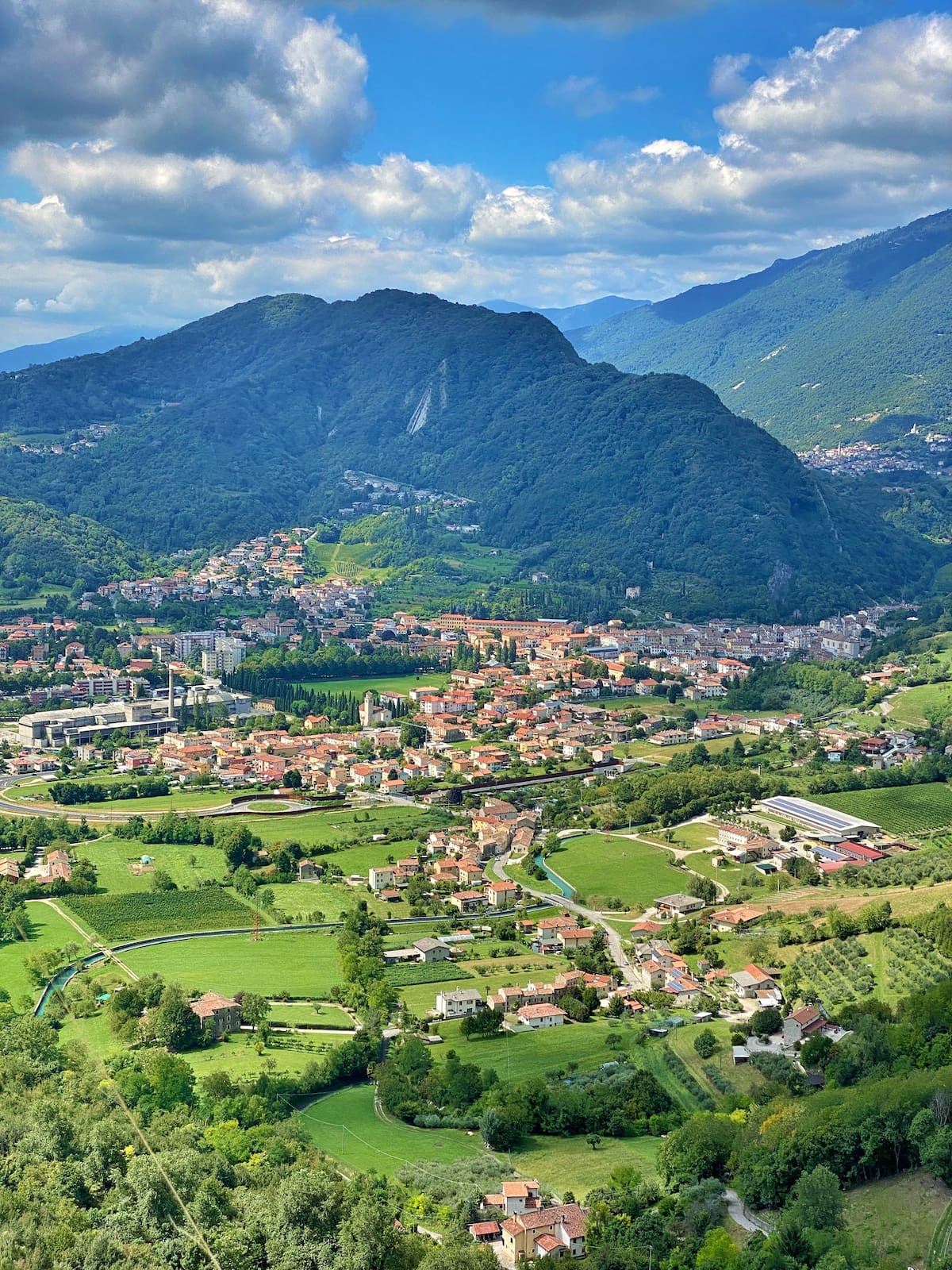
The Prosecco Experience isn’t just about incredible Venetian food and some of Italy’s best wine. These culinary delights take place against a backdrop of pristine rolling hills covered by cascading vineyards, hilltop villages, ancient farmhouses and heavenly skies. Only two spots left for The Prosecco Experience in May, 2022. You deserve this.

Tags Italy, Prosecco, Experience, Wine

A rainy morning in Venice

August 27, 2021

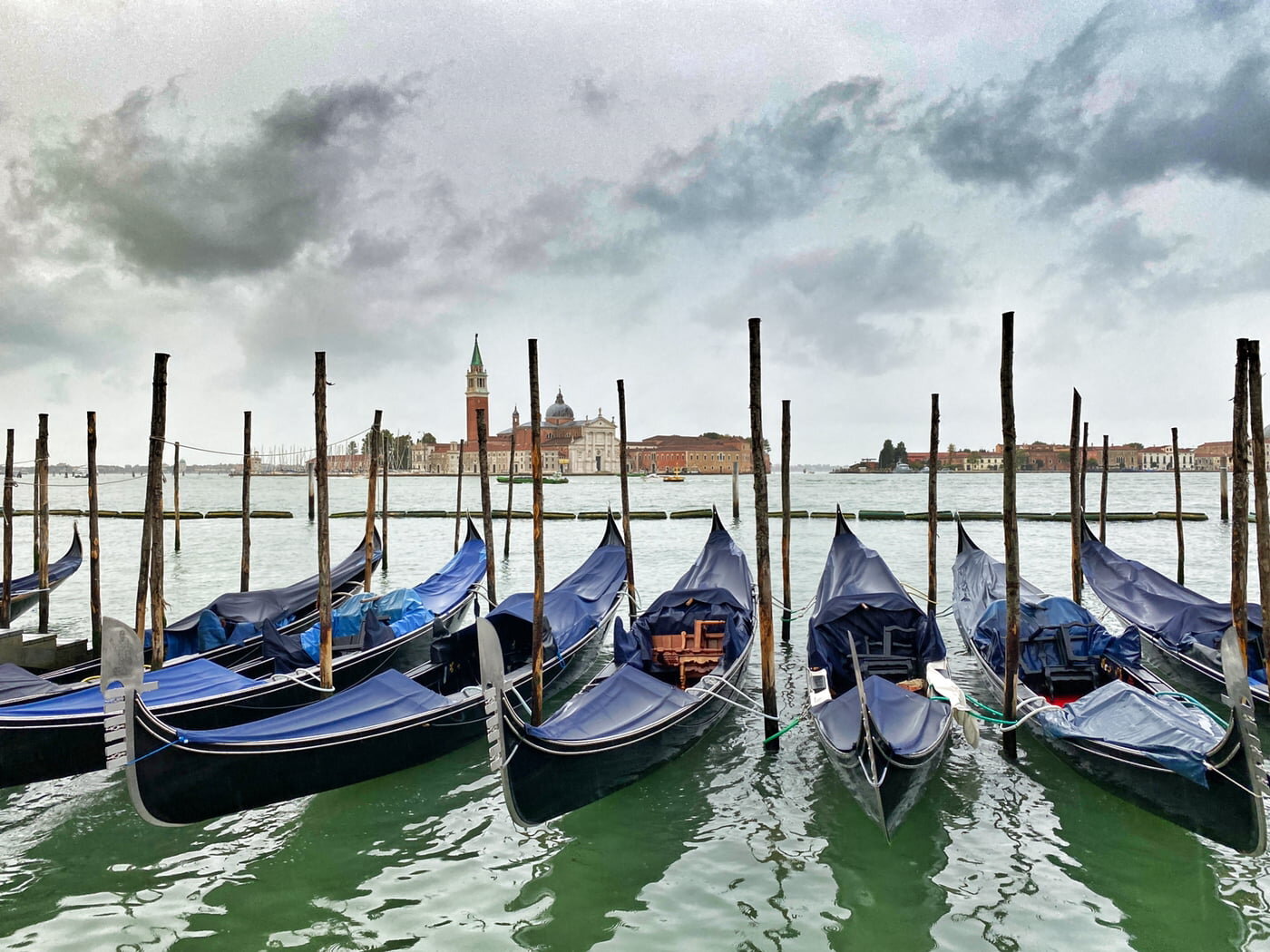
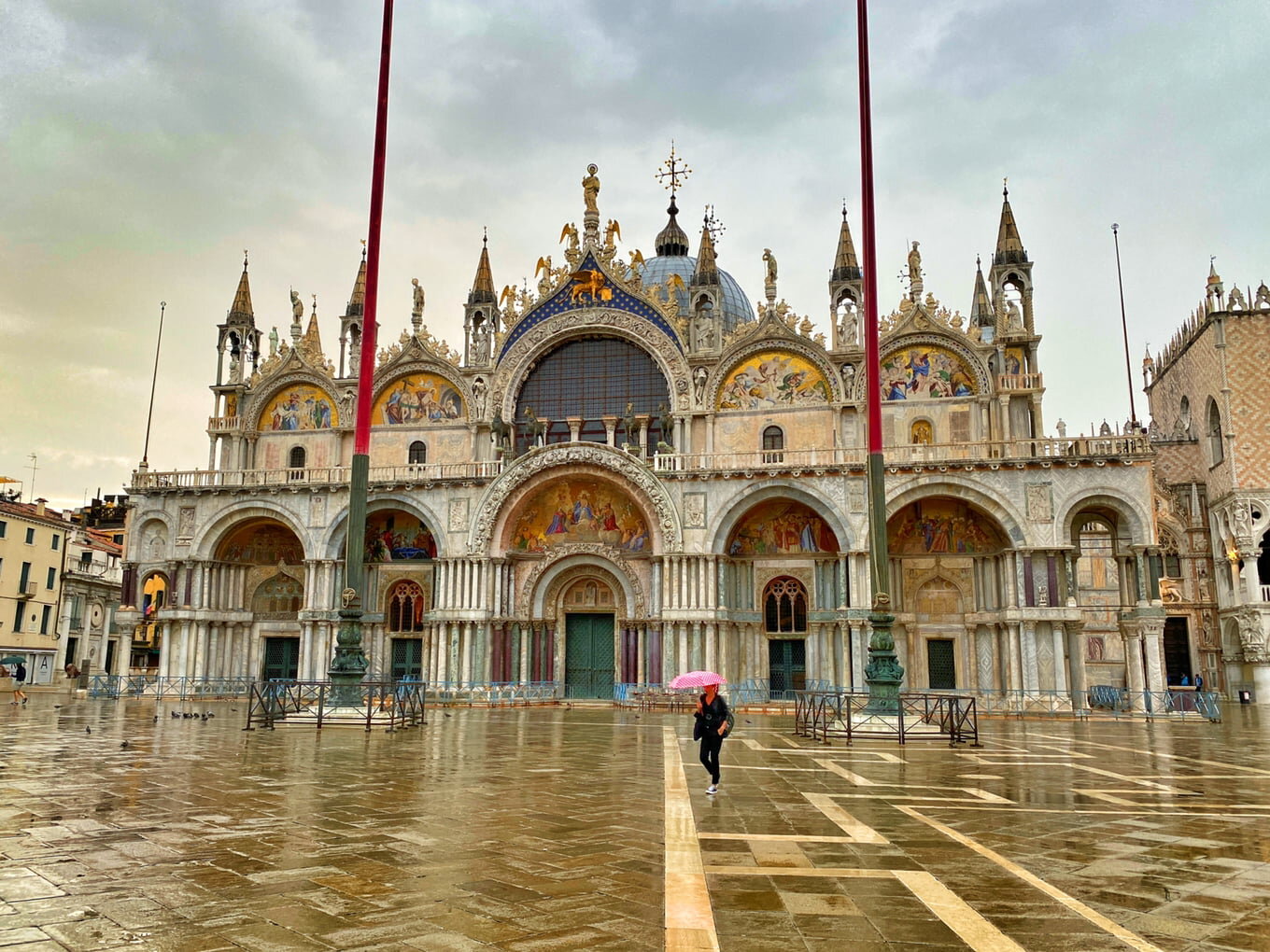
Venice is famous for, among other things, its throngs of tourists and seasonal flooding. But Venice is so nice in the early morning when nobody is around, and during a rain when the sea level is behaving.

Tags Italy, Venice

Crispy egg… apparently?

August 24, 2021

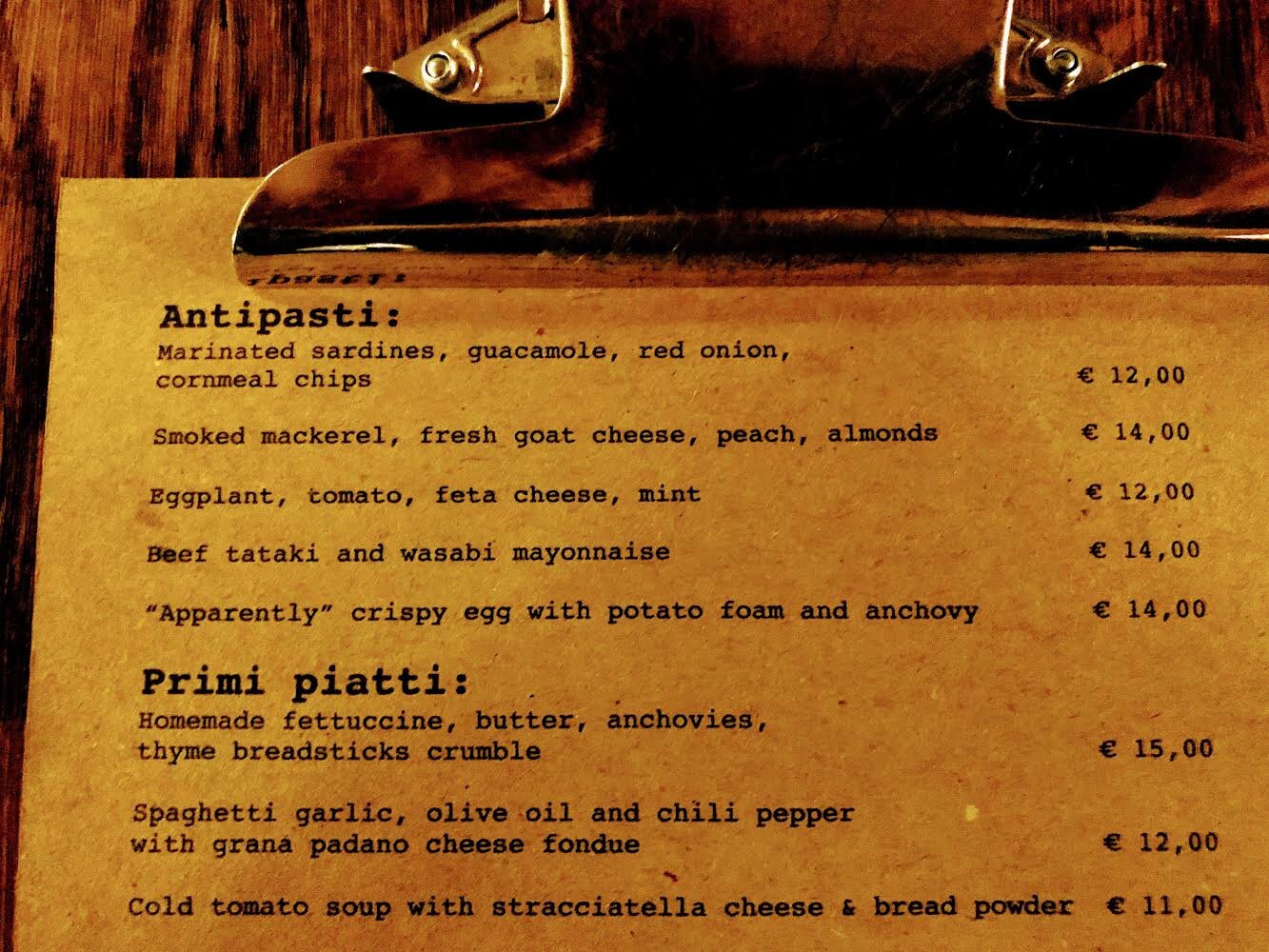
Landed in Venice, showered and made haste to a very good restaurant called Ai Mercanti up meet up with friends. Couldn’t help but notice that they’re serving what are “apparently” crispy eggs. Don’t they know?

Tags Venice, Italy

Spain becomes the best place in Europe for digital nomads

August 21, 2021

Remote old villages. Digital nomads. They were made for each other. 

The villages need people who spend money without taking a local job. The nomads need a beautiful, quiet place to work, live and experience what it’s like to live in a traditional setting. 

That’s why some 30 villages in Spain — each with fewer than 5,000 residents — formed an organization called the “National Network of Welcoming Villages for Remote workers.”

Communities across Europe have embraced the digital nomad movement, especially in Italy. But Spain’s program is different. 

The site is similar to AirBnB, showing how many guest houses are available in each town, and enabling nomads to book a place. 

The Spanish program offers up a local resident host to serve as a liaison for nomads, connecting them with life in the town. 

This program gets at the heart of the digital nomad and Gastronomad lifestyle. You can forget the mobs of tourists in Barcelona. Instead, visit the real Spain where locals will greet you with open arms. 

The organization is totally compatible with a new “Startups  Law” that enables digital nomads to stay and work in Spain for up to two years at a time. 

Suddenly, Spain moves to the front of the line as a great place for digital nomads to temporarily live.

Tags Nomadic
IMG_8867.jpg

This flight search website gives you the covid rules for arrival

August 1, 2021

This is the flight-search site and app we need right now: Escape enables you to check out all flight options, including times and fares, so you can choose where and when to go. Best of all, a new feature gives you the covid rules — whether you need to prove vaccination or not, etc. — so you can factor that into your choice.

Tags Travel
ot.jpg

Remote workers need workations, too!

July 31, 2021

It's a great idea to unplug completely from work sometimes, remove yourself from home and reboot your mind. (This is an excerpt from our Gastronomad newsletter.)

Everyone knows vacations are good, healthy and necessary.

So why are workations so controversial?

A workcation is like a vacation, but with two differences: 1) you're working the whole time; and 2) you're not taking time off — those days are counted as work days, not vacation days.

The workation concept triggers a general contempt on social media. An extremely non-scientific, non-representative poll on my Twitter account showed that fewer than one-third love the idea and the rest either hate it or aren't sure.

Workation is a slang neologism in existence for more than 150 years. It came into popular use especially in the 40s, and again in the late 70s and early 80s, returning now in a post-pandemic, remote work, digital nomad context.

In the past, workation meant working while you were supposed to be vacationing. Now it means working in a place and context of a vacation, but actually working and getting paid to work. In other words, it used to mean working while you were supposed to be vacationing. But now it means working while you’re supposed to be working, but in a nice place.

There's a big difference: In the old meaning, you were using your time off to work without pay. In the new meaning, it means you're living temporarily as a digital nomad — getting your normal pay, not using vacation days and simply moving your “office” to the location of your choice.

As I explained in my book, Gastronomad:

"Years ago, while living on the Greek island of Crete, I discovered a really nice restaurant with an amazing view of the sea. So I decided to eat, drink some coffee and work there for the rest of the afternoon. After a while, I struck up a conversation with a couple at a table nearby. They were Germans on holiday and confessed that they assumed I was one of those workaholic Americans they heard about who can’t even take time off during a vacation. There I was in this beautiful place, slaving away. Pathetic!

But then I explained: I wasn’t on vacation at all. That day was an ordinary work day for me.

It’s not that I’m bad at taking vacations. I’m just good at choosing an office."

That's the key fact about workations. It's not about what you do during your vacation — you still get your normal vacation time. It's about what you do while you're working.

The covid pandemic drove a new wave of remote work, which for most means working in a home office instead of an office office.

I'm here to tell you that not only do remote, home-office workers need vacations, they also need workations — and are in a better position to take them.

It's psychologically unhealthy for many people to live and work in the same house and rarely leave — or just leave once or twice a year only for their paid vacations.

While on workation, you're spending your work hours in a new and presumably better environment, with new and better food, new and better weather. After hours, during weekends and other time off, you're on vacation. Close your laptop, and the mini vacation begins.

Even during the workday, you can take a 20 minute break and jump in the sea.

This picture is me on a workation in Monterosso, Italy — one of the five villages that make up the Cinque Terre. It was a regular work day for me. Except Italian food for breakfast, lunch and dinner; Italian coffee; a sunny beautiful location to work at; dips in the Mediterranean every couple of hours; and a full-blown vacation after hours and on the weekends.

A workation is more like work when it comes to getting paid. But it's more like a vacation when it comes to your state of mind.

Many employees who couldn't take workations before because their boss demanded butts in chairs at work now can because of the new acceptability of remote work. Nearly everyone with permission to work remotely can take workations whenever they choose.

One silver lining of this awful pandemic is the remote work trend. Take full advantage by experimenting with a workation. Who knows? You just might like it so much you'll want to sell your house and do it full time. - Mike

Tags Nomadic
cdmxwifi.jpeg

AirBnB's new speed test feature is nice, but not enough

July 29, 2021

Airbnb announced today a new feature that enables guests to see an actual speed test for hosts’ WiFi connections before booking.

AirBnB’s move is a recognition of the trends of workations, digital nomad living and the rise in the importance of online digital content and resources, as well as the centrality of video calls for business communication.

AirBnB added M-Lab-based software to its mobile app that speed tests the host’s WiFi network, then displays that result on their listings page.

There are two benefits: 1) All hosts are now using the same speed test system, so the results are comparable; and 2) an actual result stops hosts from exaggerating, rounding up or flat-out lying about connection speeds.

Nice, but not enough. The system still can and will be gamed. In fact, the new speed tests actually helps unscrupulous hosts game the system. Here’s why:

First, AirBnB WiFi routers often have the best performance in places that guests cannot access or cannot actually do work — but hosts can test from those best-in-house locations. This is especially true in countries in Europe, North Africa and Latin America with ancient buildings that have thick walls through which WiFi cannot penetrate. The difference in old buildings between the best and worst WiFi spots is huge.

Second, WiFi performance and internet performance varies wildly depending on local congestion. In some locations, even where hosts have fiber-optic connections, connections become unusably slow at peak hours, forcing users to wait for five minutes to load a simple web page. This happened to me recently in Paris in an apartment with fiber.

What’s going to happen now is that hosts will test WiFi in places that guests cannot access and at times that won’t always coincide with guests’ business hours when they need a good connection.

AirBnB’s system will enable hosts to “prove” they offered a great connection when guests complain that the connection sucked.

What’s needed now is an upgrade that tests WiFi speeds every hour and posts the results of 24 hours, and also a system that measures in every guest work space (not sure how to verify this, but I’m sure it can be done).

Tags Nomadic
mim.jpg

This new website tells you which countries have the best digital nomad visas

July 15, 2021

It's called Nomad Visa, and if they keep it updated it will be a great recourse because the visa and entry requirements are changing fast.

So many new places to discover in Provence

July 4, 2021

No matter how many times we live in Provence, we still aways discover new and wonderful places. Like this village of Le Barroux, which is old and beautiful and a still-active community. A family still lives in the castle and, if you look closely, you can see them having dinner on their balcony.

(Don’t worry: They were very much in public — you can see them from half the town, and the drone was impossible to see or hear from the altitude I was flying at.)

Tags France, Provence

A Postcard From Post-Pandemic Provence

July 4, 2021

Greetings from Provence! We couldn't wait to return to Europe. So we didn't wait. (This post is an excerpt from our free email newsletter.)

We landed in Spain early in the morning on the first day Spain allowed vaccinated Americans without pandemic restrictions. And then we flew to France early in the morning two days later on the first day France welcomed vaccinated Americans.

Anti-covid restrictions were and are still in place in both Spain and France. And the practical effect of Spain's rules resulted in needless futility. Indoor restaurants and bars were open, and a general mask mandate allowed for no mask while eating or drinking. That all sounds reasonable, but in practice it meant that in Spain, everyone suffered mask wearing outdoors in the heat where a mask is pointless. But as soon as anyone sat down indoors, the masks would come off. And so everyone wore masks when they didn't need to (outdoors), but did not wear them when they would have been effective (indoors).

In France we noticed that nobody was eating indoors, but the outdoor restaurants were booming.

France's response to the pandemic was different from most countries. They used restrictions on distance — for example, dog owners were allowed to leave their homes to walk the dog, but were not allowed to walk beyond one kilometer from their home (a little over half a mile). They also used curfews.

At the beginning of the year, the curfew started at 6pm, which changed to 7pm in March. The significance of this is that the French normally eat dinner after 7pm and in Paris, often times after 10pm. So the regular schedule of dining out was seriously disrupted in this restaurant-loving nation.

When we arrived in Paris, the curfew was 9pm, and within a couple of days it was extended to 11pm. In other words, normal restaurant dining was back! The elation of locals was palpable, and we felt so privileged to join them in their elation.

A few days before our Provence Experience began, France stopped requiring outdoor mask wearing.

Tourists from English-speaking countries have been allowed in France for three weeks, but even now there are almost none. In Paris and Provence, you hear French almost exclusively. In sweet Provencal towns, like l'Isle Sur la Sorgue, where we are currently living, visitors from nearby towns flood the streets, cafes and markets on weekends. But foreigners are rare or nonexistent.

All our French friends and other locals that we meet tell us how happy they are to see American visitors again, and for three reasons. First, Americans are the world's best tippers. At restaurants, Americans tend to order more expensive items than average, then tip a high percentage on that purchase. Because French law dictates a 15% service charge to be added to every restaurant bill, French diners often don't tip at all. If they do, they might tip 5% and never more than 10%. Americans usually tip between 15% and 20% on top of the service charge. Both, restaurant and waiter make bank on yanks.

Second, Americans are vocally appreciative. Americans love France, French food, French wines, French landscapes and French buildings and towns, and aren't shy about saying so. Smiles and effusive praise are cultural norms for Americans.

And third, Americans are large in number — by far and typically the biggest group of visitors to France from outside of Europe. When there's no pandemic, American visitors to France number well over three million, which represents around one third of the total visitors from outside Europe.

France's economy is heavily dependent on tourism, and that's especially true of the Provence-Alpes-Côte d'Azur region, which includes both the Provencal countryside and the French Riviera.

When the pandemic hit, restaurants, hotels, wineries and other such businesses took a massive hit and barely survived.

For French providers to see members of that big, loud, appreciative, generous-spending nation back in town is a symbol of a return to normal.

Another universal we discovered is a wider language barrier. All our English-speaking friends have substantially regressed in their ability to speak English. And our French has suffered, too.

Above all, here in France, the joy of freedom, the joy of gathering, the joy of sitting at a table with good food and conversation is almost overwhelming. We felt that joy every day during our Provence Experience.

What an amazing time to be in France!

And, finally: Happy 4th of July, Americans!

ppp7.jpg
ppp6.jpg
ppp5.jpg
ppp4.jpg
ppp3.jpg
ppp2.jpg
ppp9.jpg
ppp8.jpg
IMG_8377 (1)-01.jpg

Inside the Magical World of Mezcal

May 20, 2021

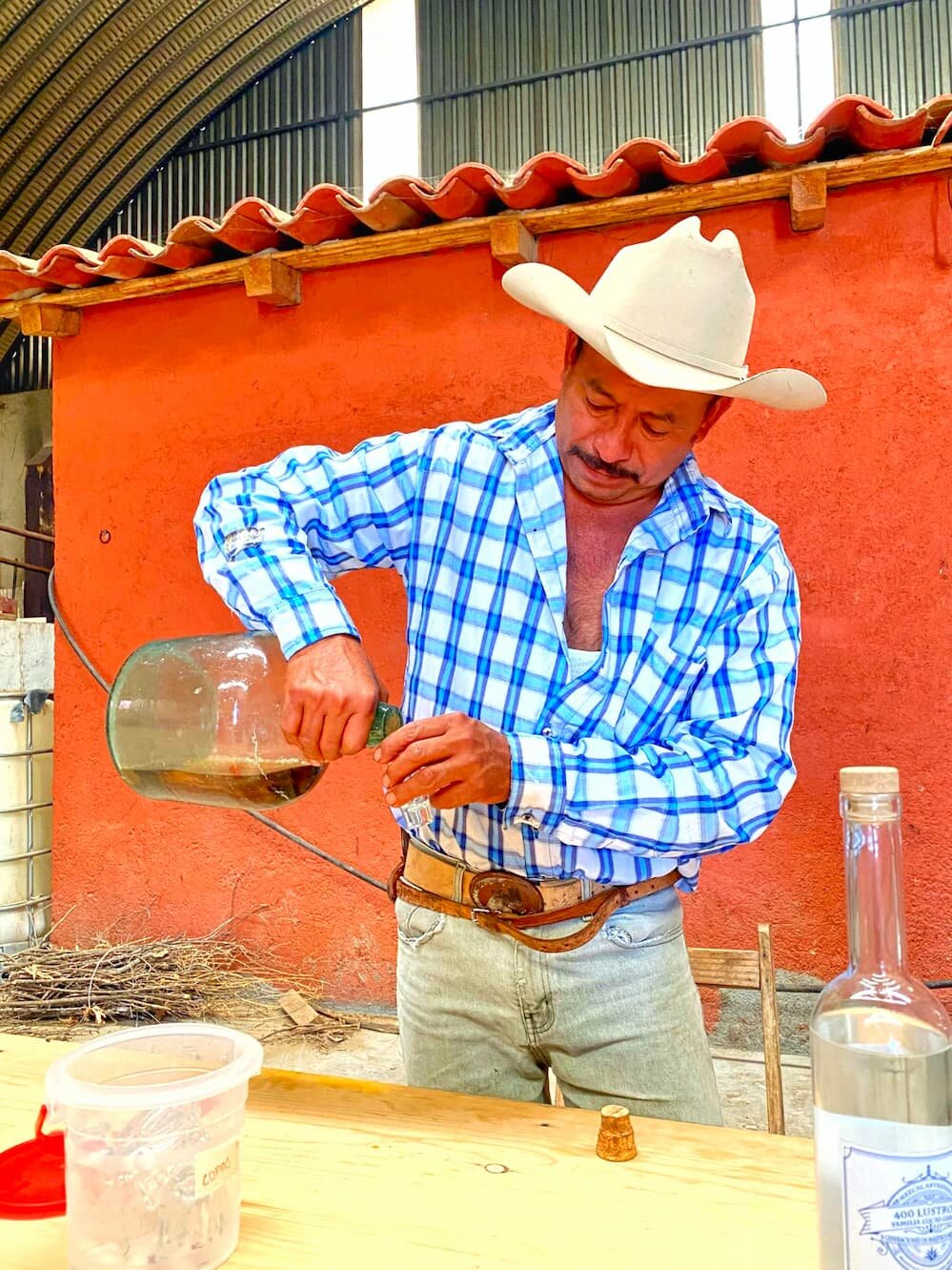
Do you know what mezcal tastes like?

Mezcal is a distilled beverage made from cooked and fermented agave juice. But that definition barely scratches the surface of this incredibly complex spirit.

Most people outside Mexico are more familiar with tequila, which is in fact one kind of mezcal. All tequila is made from agave tequilana Weber, or Weber blue agave and cooked in steam ovens, usually in the state of Jalisco.

Mezcal, on the other hand, can be made from any of roughly 50 species of agave, and each brings a different taste to the final product.

Mezcal agave species have names like Tobalá, Americana, Durangensis and many others.

One of our favorite species is Agave Karwinskii, which is grown mainly in Oaxaca, and which comes in varieties called Cuishe, Baicuishe, Madre Cuishe, Barril, Tobaziche and Verde, each variety offering differences in taste (but all very good).

One way to look at the difference between tequila and mezcal is that tequila is simple and mezcal is complex. Tequila is relatively simple, because it's made with one agave type and one production method. Mezcal is complex because it's made from many agave types, many production methods, many variations on flavors and (like tequila) also has variety introduced through aging.

The word mezcal is a bastardization of the Nahuatl word "mexcalli," which means "baked agave."

Mezcal is made in the Mexican states of Durango, Guanajuato, Guerrero, San Luis Potosí, Tamaulipas, Zacatecas, Michoacán, and Puebla. But most mezcal is made in the state of Oaxaca.

Artisanal and traditional mezcal making is very much a phenomenon of Oaxaca. Of Mexico's 625 mezcal production facilities, 570 of them are in Oaxaca, producing 90% of the country's mezcal.

How Mezcal is brought to life

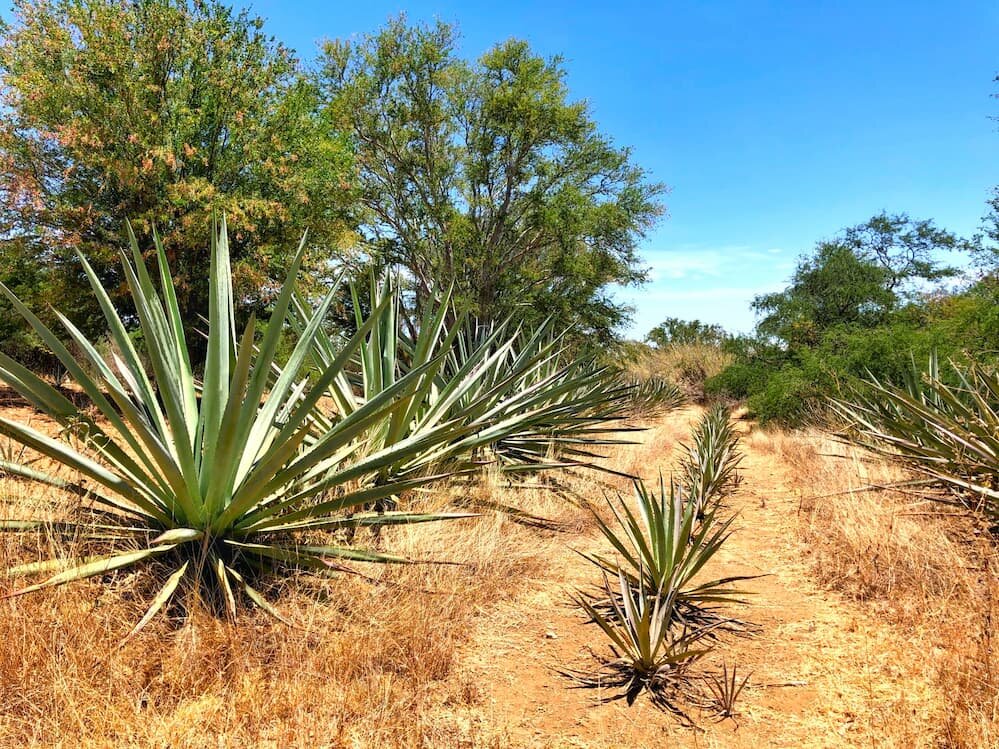
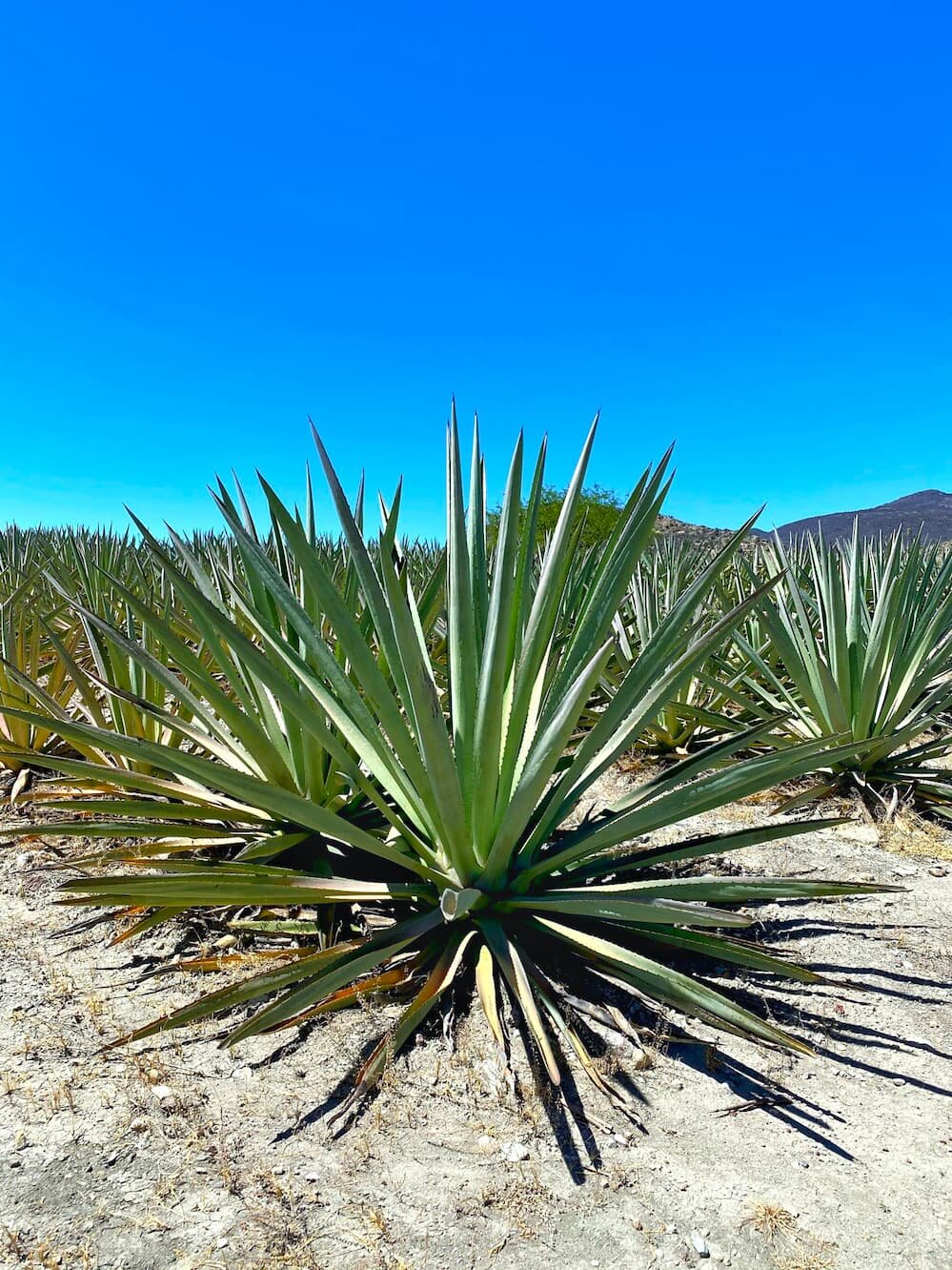
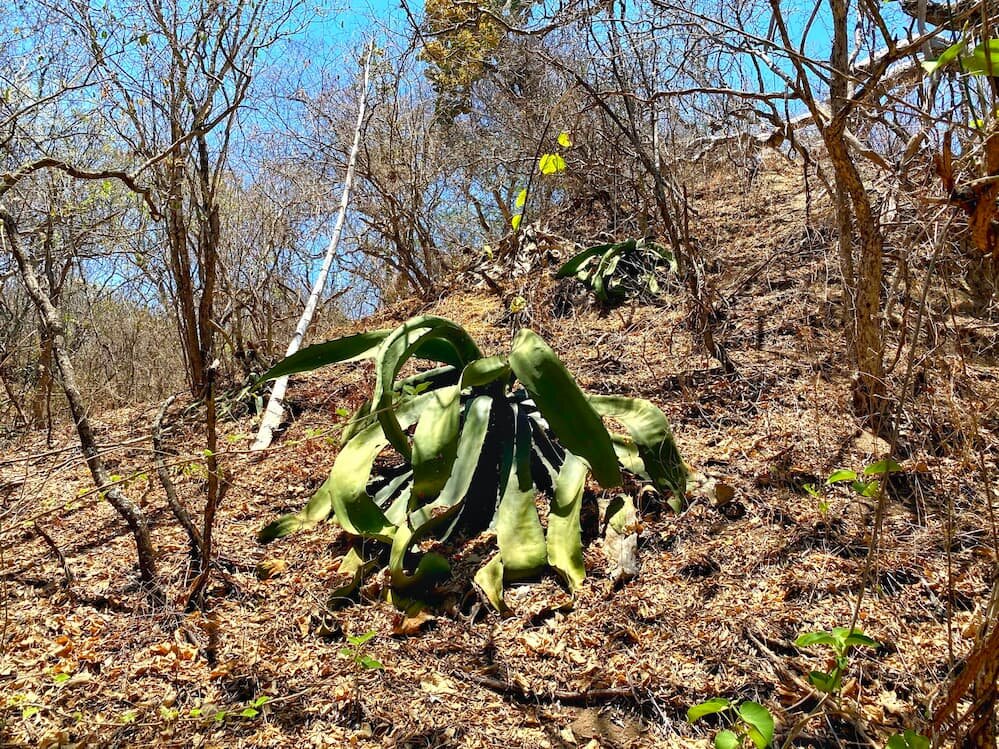
Mezcal is made from agave at the end of the plant's life.

Most agave plants are harvested after roughly 10 years, although some can grow for 30 years before harvesting, depending on the agave species. Most mezcals are made with farmed agave. But some are made with wild agave, and these have distinct flavor differences from their domesticated cousins.

When most agave species ripen, they bloom by quickly growing a single flower stalk up to 15 feet high, a process that, if allowed to occur, enables the plant to seed before dying, but the flowering spoils the piña for agave making. Mezcal growers chop this stalk off to preserve the piña until they can harvest it.

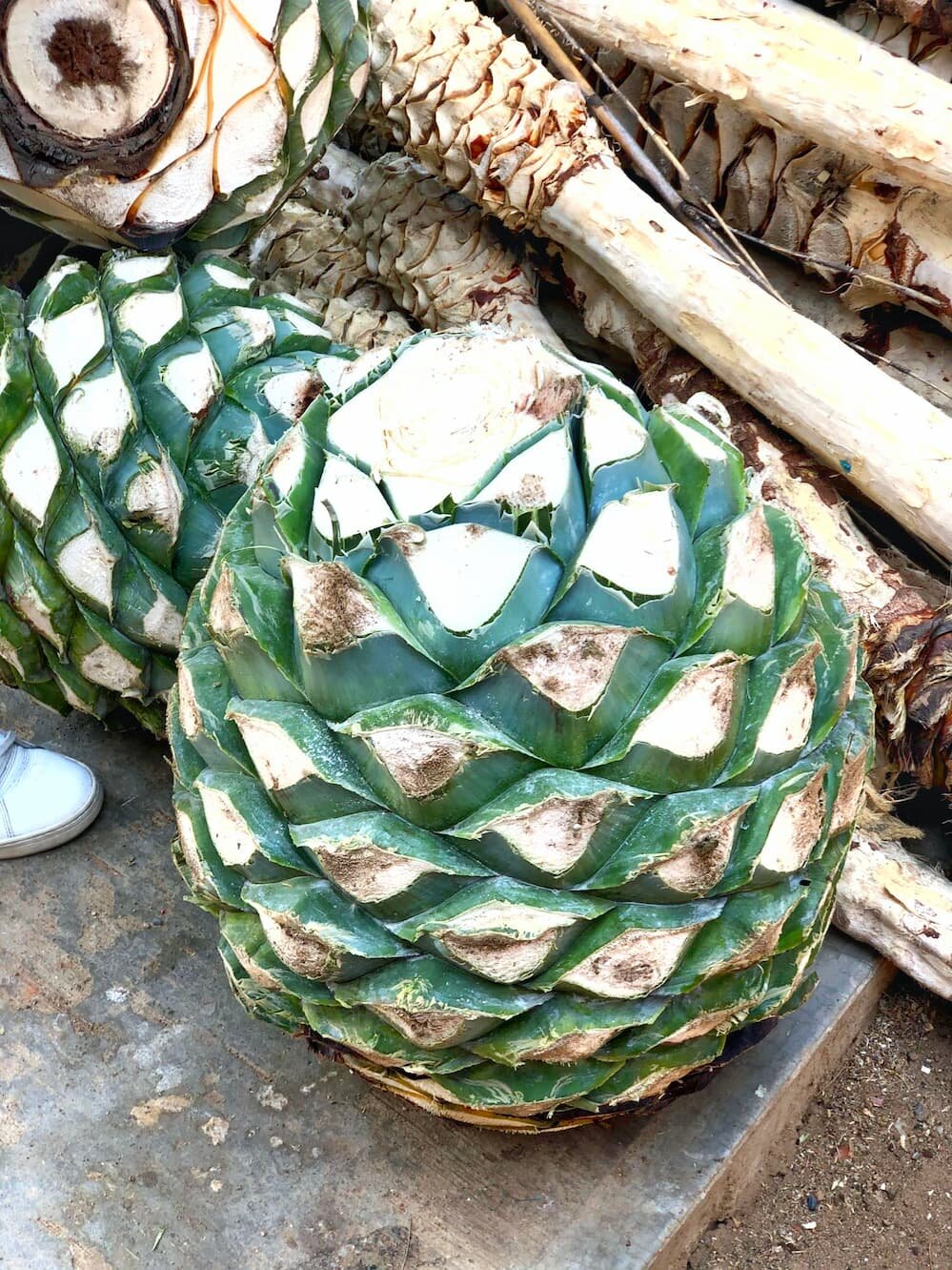
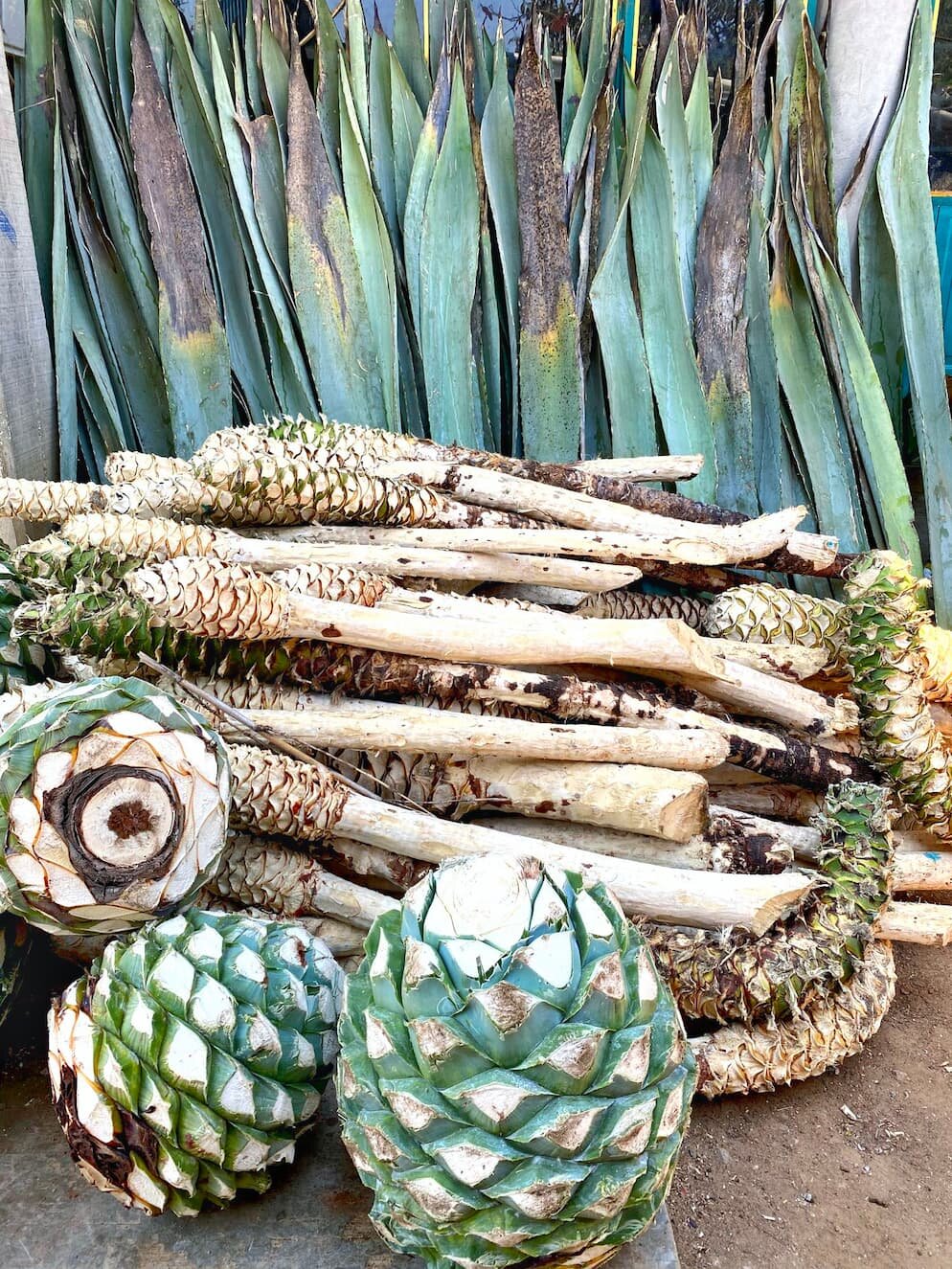
They chop the spikey leaves off with a machete, then hack and shovel the "piña" at the base to remove it from the roots. This piña is sometimes roundish, sometimes elongated, depending on the variety of agave.

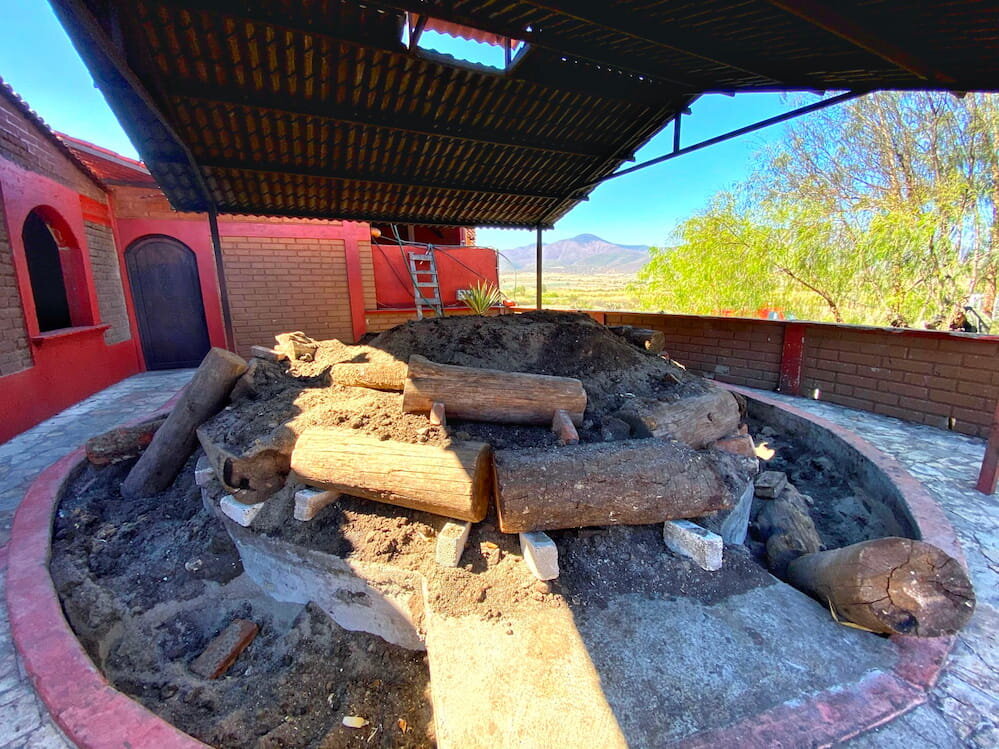
The piñas are cooked for a few days, often in underground pits. Underground baking causes the smokey taste in most mezcals. They can also be cooked with steam ovens in the same way tequila is cooked.

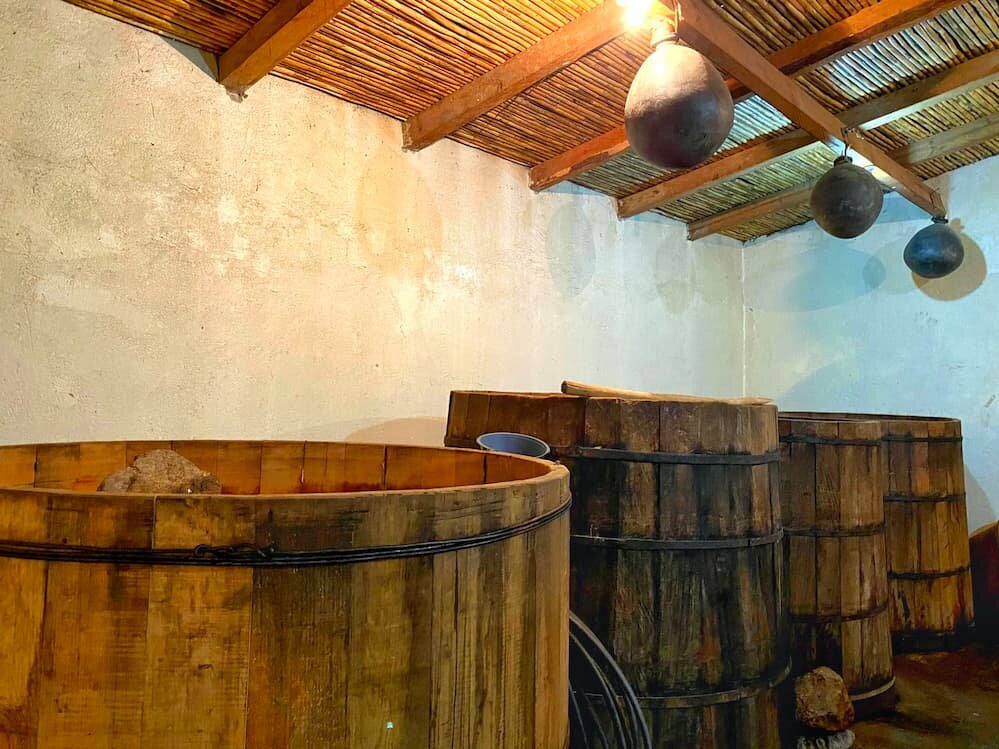
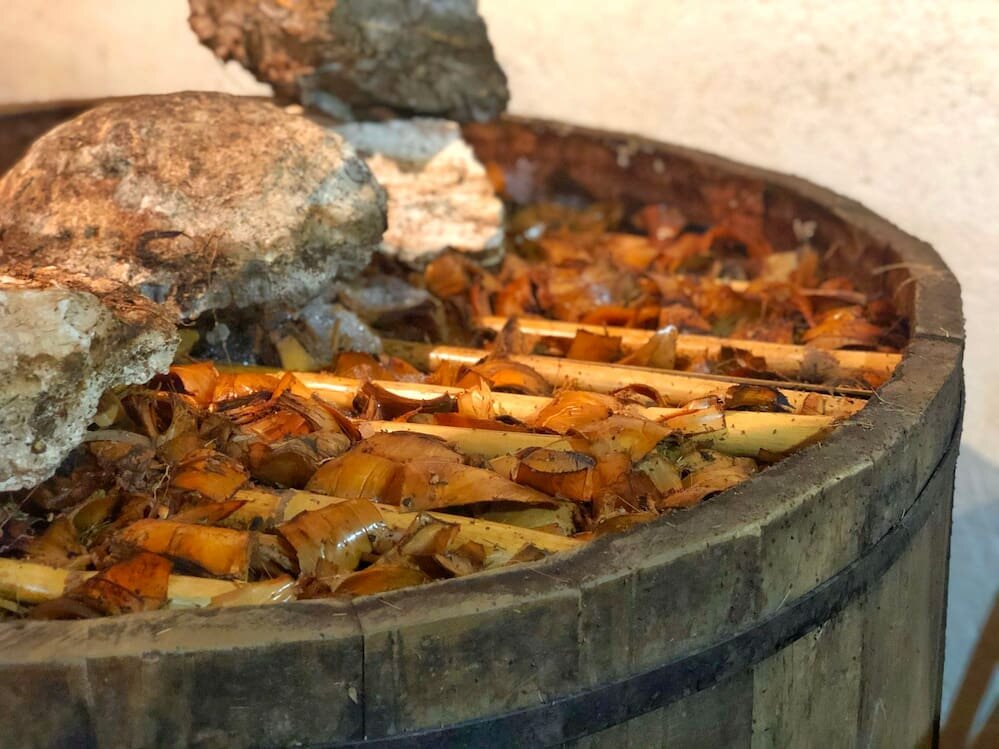
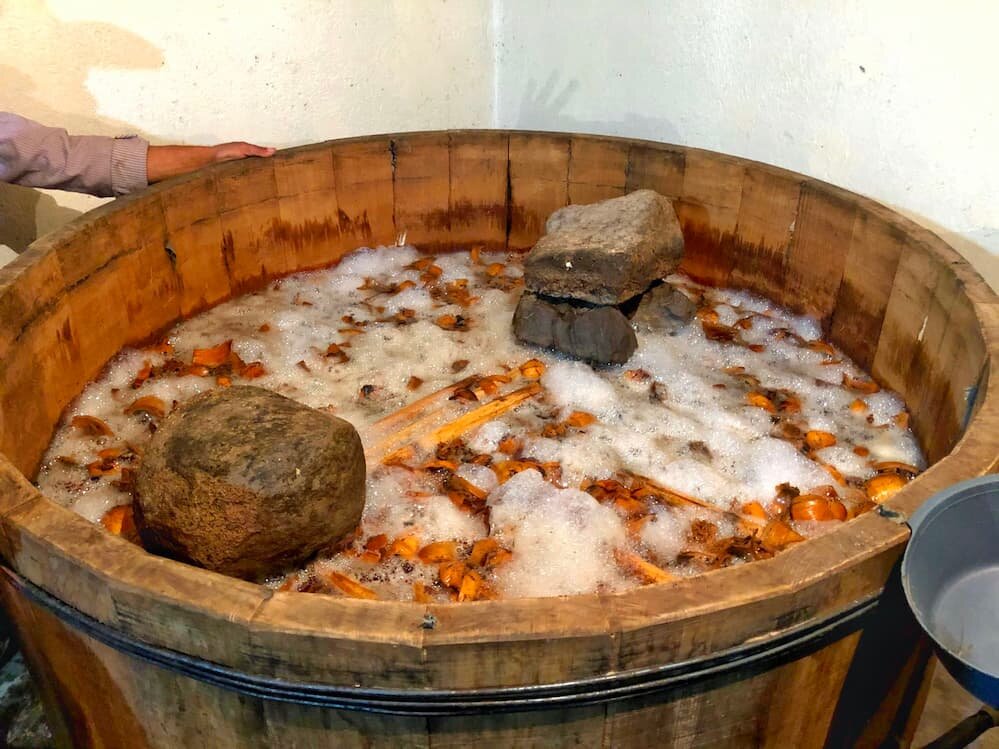
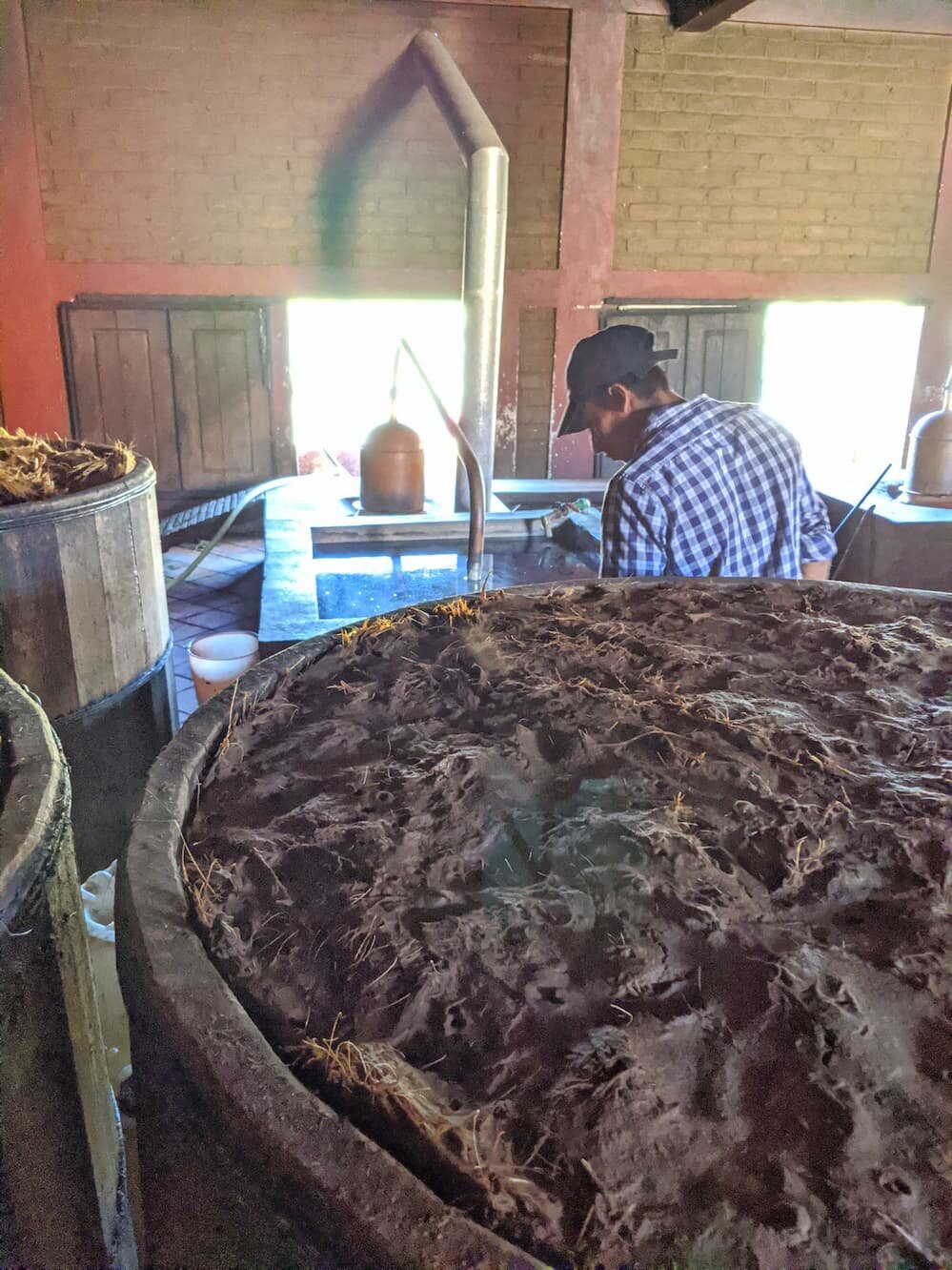
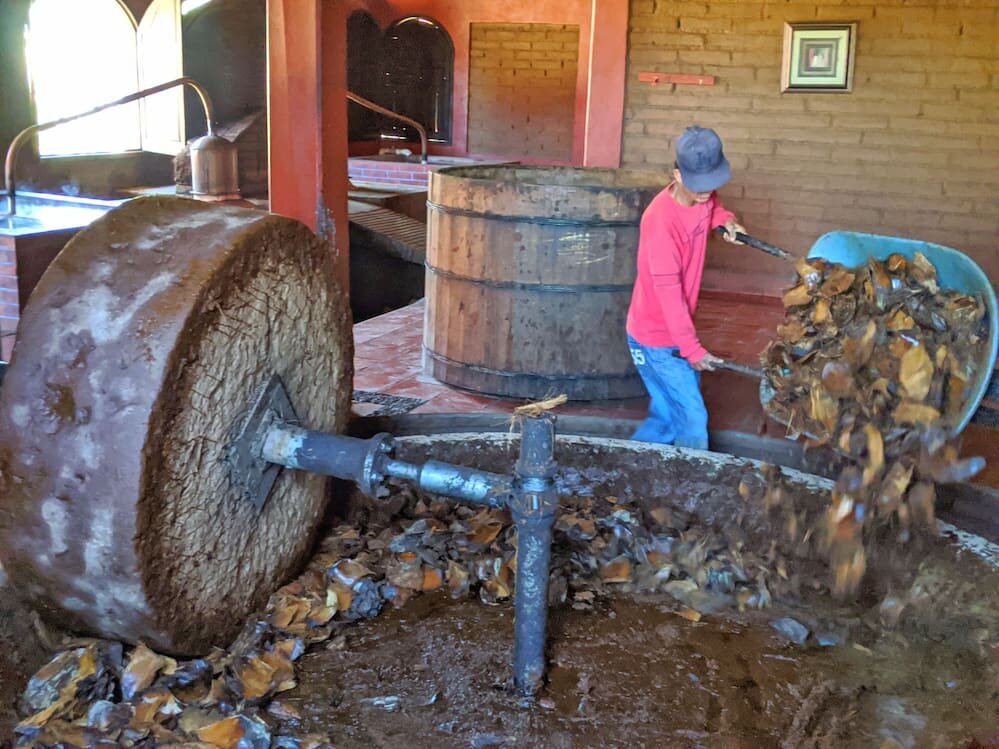
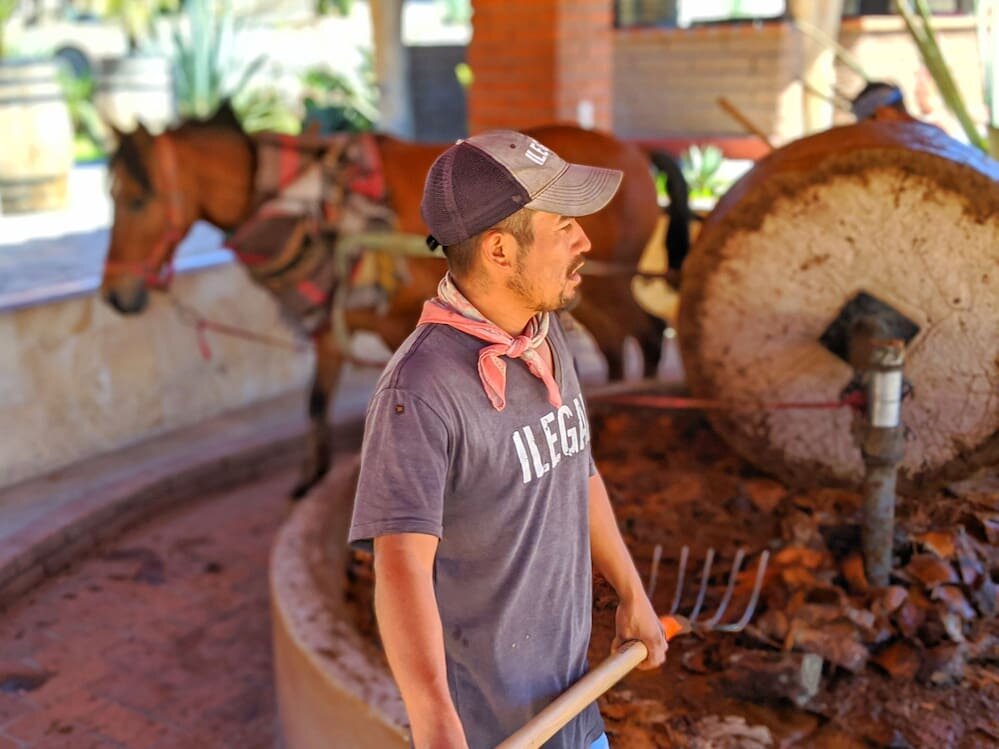
The cooked piñas are then mashed, sometimes with a stone wheel pulled by a horse, and then fermented with water in wood barrels or vats.

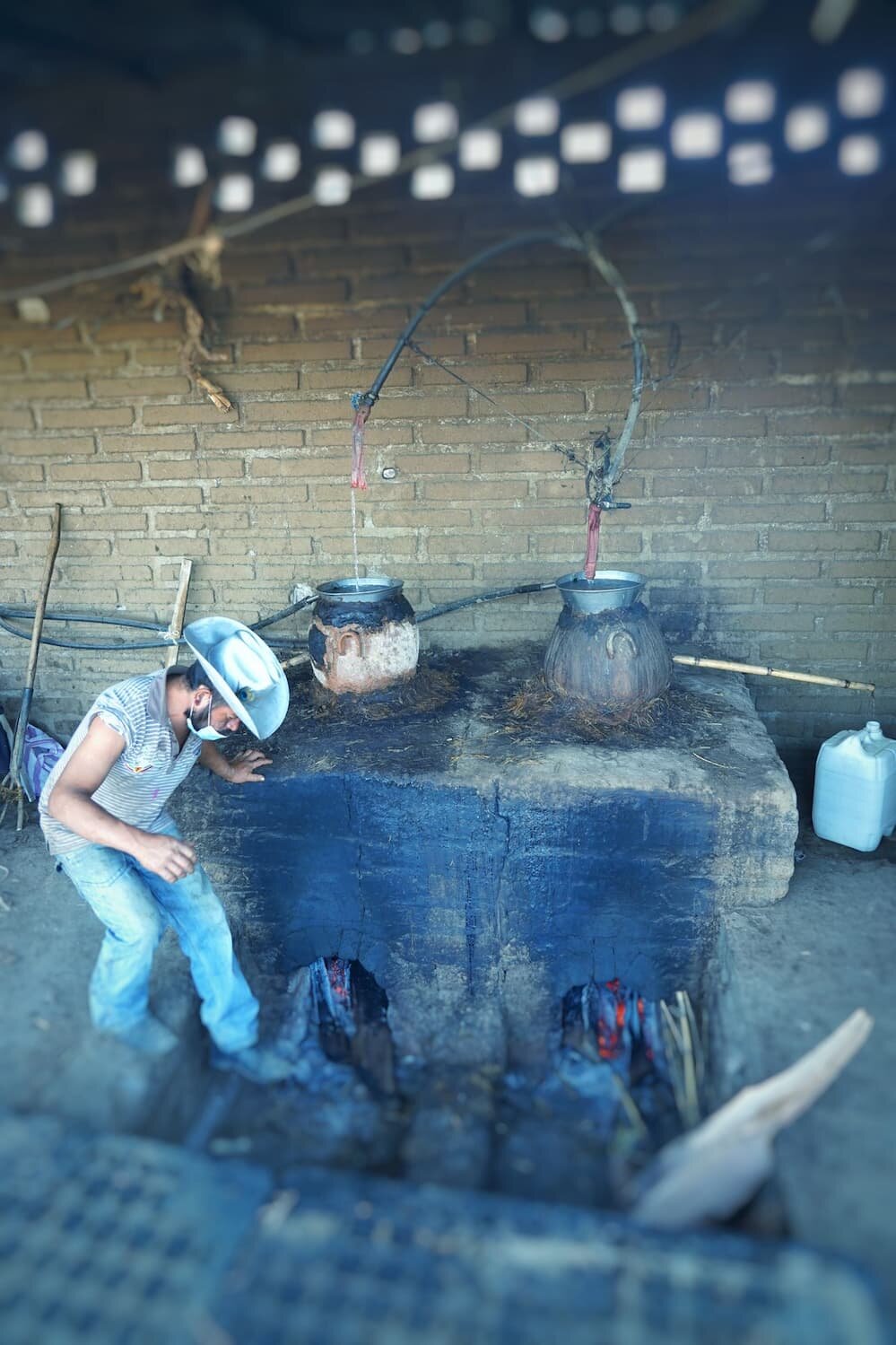
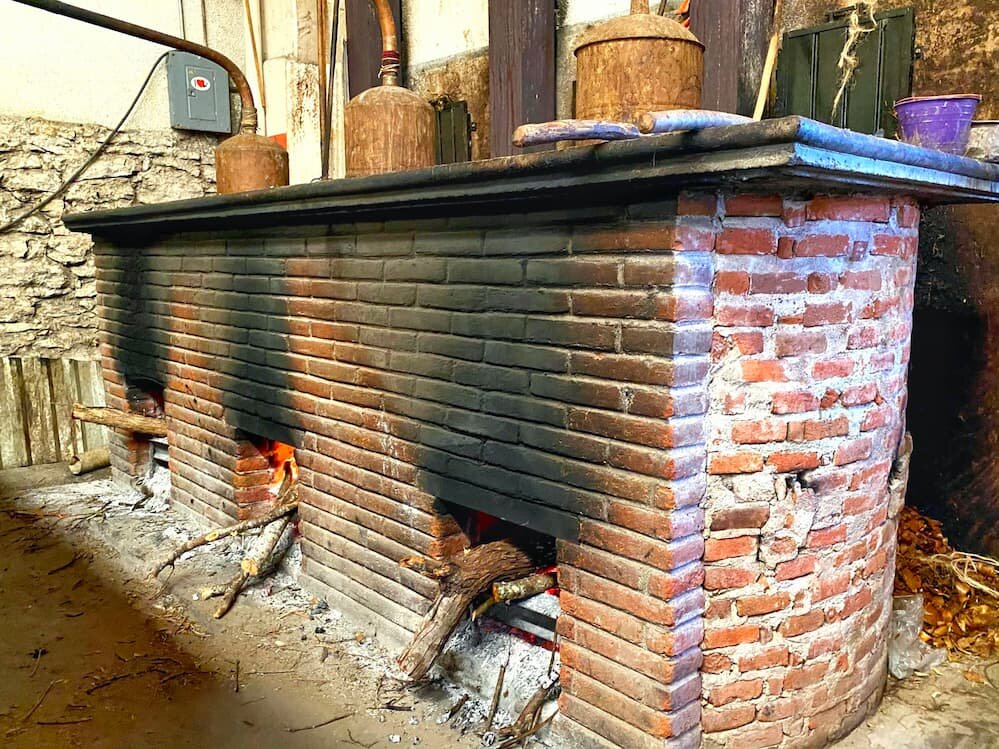
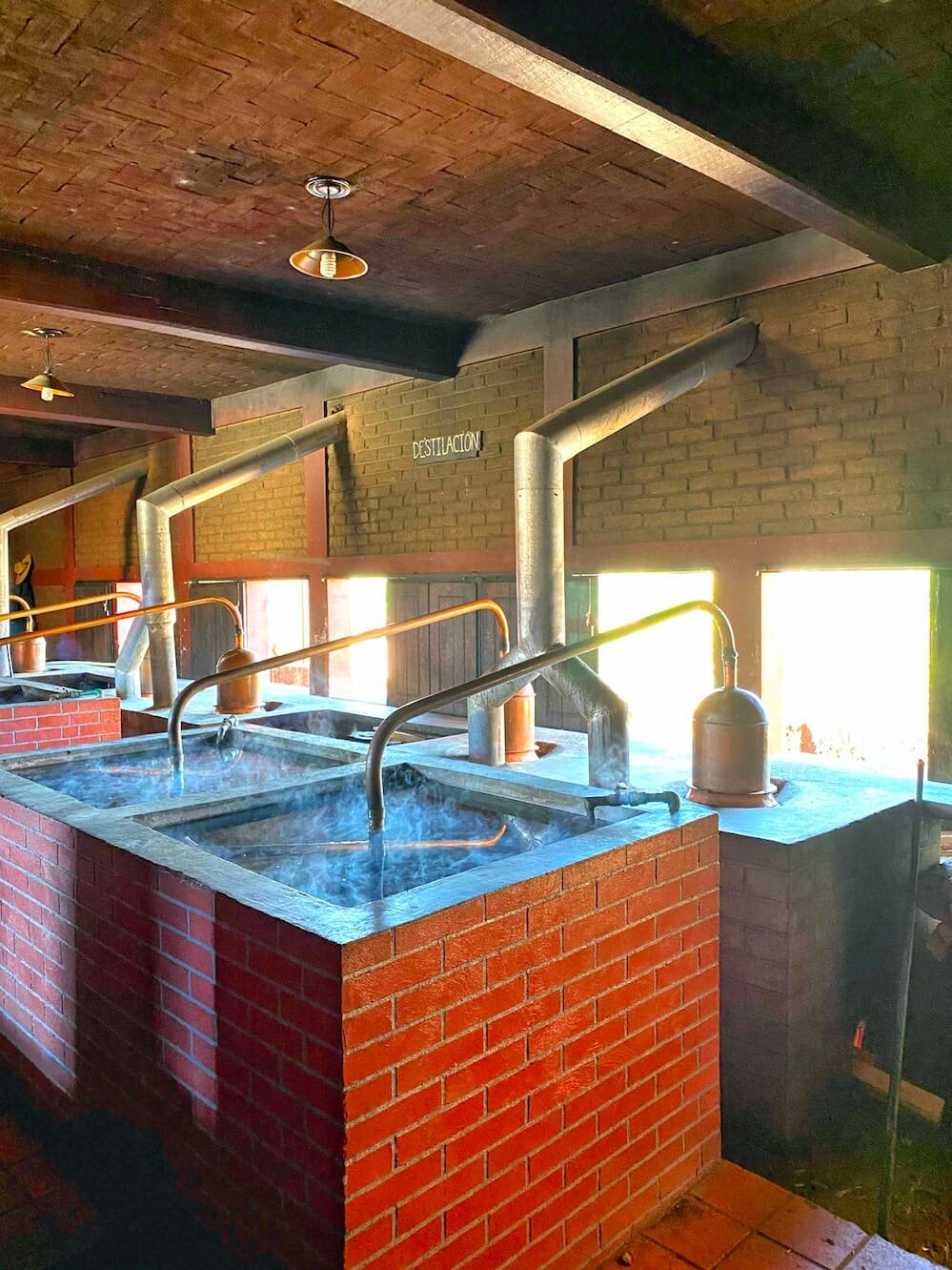
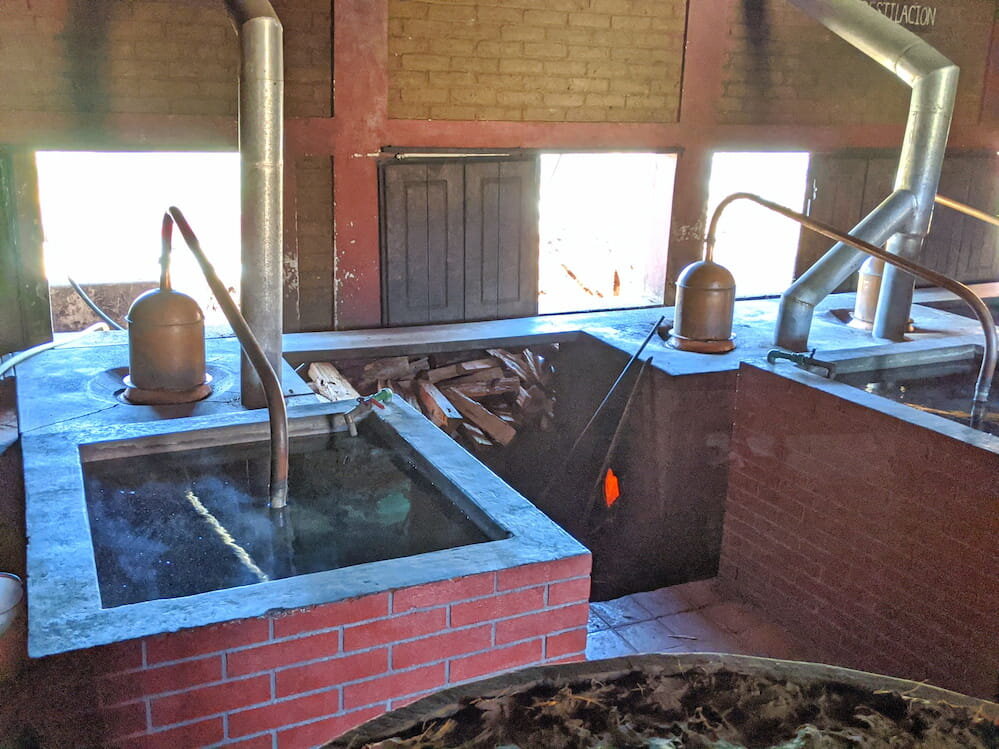
The fermented liquid is then distilled, usually twice — sometimes thrice — in copper or clay pots. (Ancestral distillation happens in clay pots and wood pipes.)

After distillation

The reason mezcal is available in such breathtaking variety is that so many factors contribute to the taste: The species of agave, the cooking method, the fermentation time, the distillation process, the aging process, and also things added to affect the flavor. These can include fruits, herbs, spices, chicken, turkey or duck.

Mezcal flavored with poultry happens either during steam cooking or distillation. In other words, the turkey is not introduced to the mezcal after distillation. Produce, if used for flavor, is added to the boiling mescal during distillation.

For some types, a moth larva is added during the bottling process for flavor.

Most mezcal is not flavored.

Like tequila, mezcal is categorized by the degree of aging — Joven, Reposado, and Añejo.

Some of the smoothest and most flavorful mezcals are aged in wood barrels, and these tend to be yellow-orange in color.

When mezcal is aged in glass for at least a year, it's called Madurado en Vidrio.

The global mezcal craze

Abroad, mezcal is increasingly used in trendy craft cocktails, such as the "Oaxaca Old Fashioned." And, of course, mezcal is a celebrated foundation in Mexico City of the ongoing fusion of ancient mexican culinary traditions with modern and international ones.

Mezcal is growing fast in popularity outside Mexico, especially in the United States and Japan. One reason is that, in past decades, Mexico shipped mainly only low-quality mezcal abroad and the world didn't know how amazing good mezcal is. But in recent years, gringos have discovered the good stuff, and now can't get enough of it.

In 2019, the United States surpassed even Mexico in mezcal consumption, gobbling up 71% of all mezcal exports. In the US, however, mezcal consumption is stilled dwarfed by tequila, which is still much more popular.

Mezcal: a fundamental part of Oaxacan culture

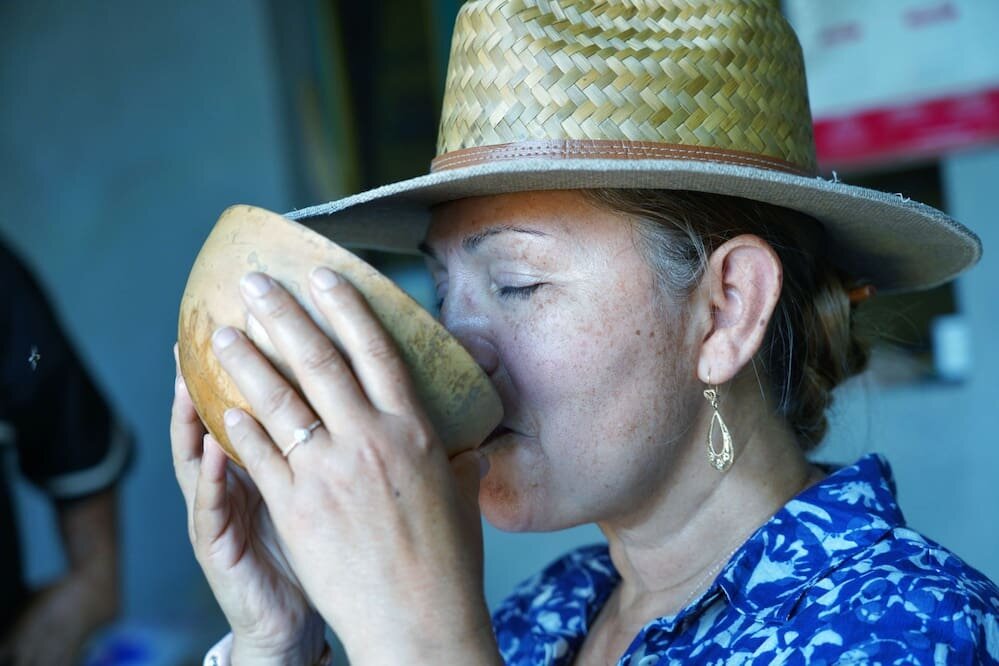
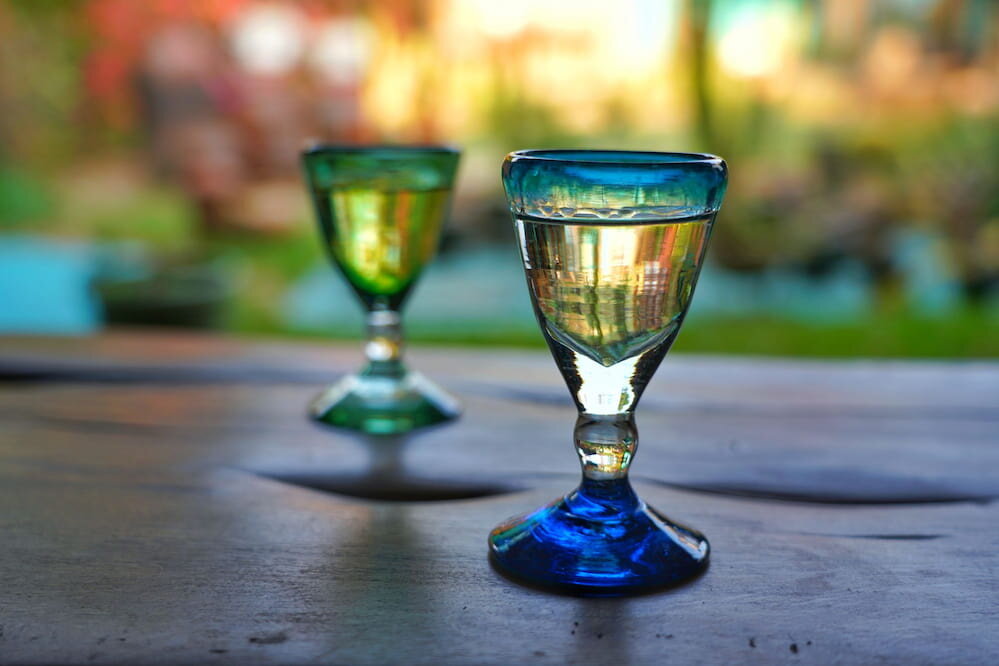
In Mexico, mezcal is normally drunk straight and sipped slowly (never as a "shot," as is common in the United States for tequila). Mexicans say you "kiss" the mezcal, meaning that you take in each sip what amounts to only drops at a time — it enters the mouth practically as a vapor.

For the drinker, mezcal is more like wine than other spirits. Terroir, the agave variety and the mezcal maker and his methods determine the outcome, which can be variable in the extreme. Different mezcal types can hit your mouth like liquid fire or can be mild as water. It can offer up notes of herbs, cinnamon, sage, peaches or caramel. It can be smokey or fruity. Bitter or smooth.

In Oaxaca, mezcal is taken for every social occasion, from weddings to the most casual visit by neighbors. It's a central part of Day of the Dead, where the deceased is poured a glass of mezcal, which is placed on the home altar often in front of a framed picture of the deceased, and then loved ones sit and drink their own.

Once you've spent time in Oaxaca, the taste of mezcal becomes inseparable in the mind from the "vibe" of Oaxaca, especially the surrounding countryside and the Oaxaca Valley, where much of the agave is grown.

What does mezcal taste like? It tastes like Oaxaca.

DSC01433-01.jpg
DSC01344-01.jpg
IMG_1032-01.jpg
IMG_0962-01.jpg
IMG_8303-01.jpg
IMG_8299-01.jpg
IMG_0947-01.jpg
IMG_0942-01.jpg
DSC01116-01.jpg
IMG_4137-01.jpg
IMG_4366-01.jpg
IMG_20200229_104631-01.jpg
IMG_20200229_104702-01.jpg
00000IMG_00000_BURST20200229110357737_COVER-01.jpg
00100lrPORTRAIT_00100_BURST20200229103557447_COVER-01.jpg
00100lrPORTRAIT_00100_BURST20200229110943765_COVER-01.jpg
IMG_8662-01.jpg
IMG_8405-01.jpg
IMG_8338-01.jpg
IMG_4060-01.jpg
Tags Mexico, Oaxaca, Mezcal
IMG_8533 (1)-01.jpeg

Provence in June: It's happening!

April 30, 2021

European officials announced this week that vaccinated Americans will be able to travel to Europe this summer. 

Specifically, the European Union’s Parliament agreed to the creation of a "vaccine passport" likely to be called the "EU COVID-19 certificate," enabling the bearer to travel from the United States to Europe without additional testing, self-isolation or quarantine, and also to travel freely within the European Union. They'll be used both by European citizens and visitors from abroad. 

The "vaccine passport" is not finalized, but the parliament agreed to finalize it before the summer travel season. To get one, you'll need to be vaccinated or have recovered from Covid-19. 

Meanwhile, French President announced this week that outdoor cafés and restaurants will be allowed to reopen on May 19, along with museums, cinemas, theaters and concert halls under certain conditions. The announcement is part of a four-step plan to re-open the country. 

As part of this plan, France will open the country to vaccinated foreign visitors on June 9. Also on that day, cafés and restaurants will be allowed to resume regular service, including indoor dining. They'll have to close by 11pm each night, according to the new rules. Events of up to 5,000 people will be allowed.

The timing is perfect for our Provence Experience, which takes place June 21 through June 26. (The Provence Experience is nearly sold out — we have one room available! Book here now.) 

Provence, with its wide outdoor spaces and plenty of room, is inherently covid-safe anyway. In fact, Conde Nast this week published their list of the 12 best places to travel in June, and one of them is Provence. 

Our Provence Experience would be covid-safe even without the vaccinations required by both Europe and by us for all participants. We stay in a spacious remote farmhouse in the countryside. We don't do activities with anyone else except our group. Everything we do is outdoors, or in large open places separate from others. 

So we're happy to announce that after a year and a half, Gastronomad Experiences are roaring back to life, starting with the glorious, delicious, beautiful Provence Experience!

Tags France, Provence
IMG_8482-01.jpeg

Tortilla magic

April 24, 2021
IMG_8485-01.jpeg
IMG_8500-01.jpeg

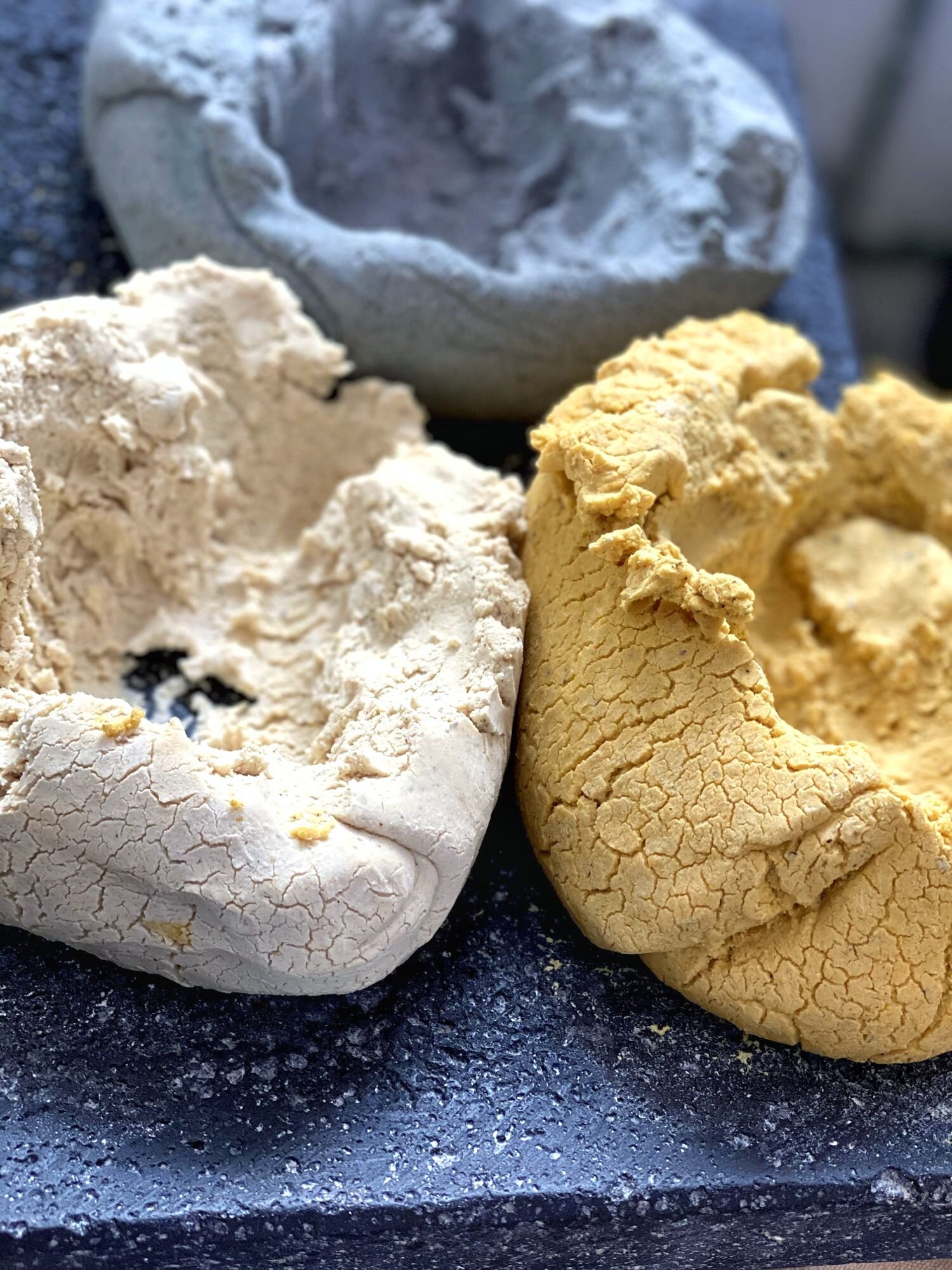
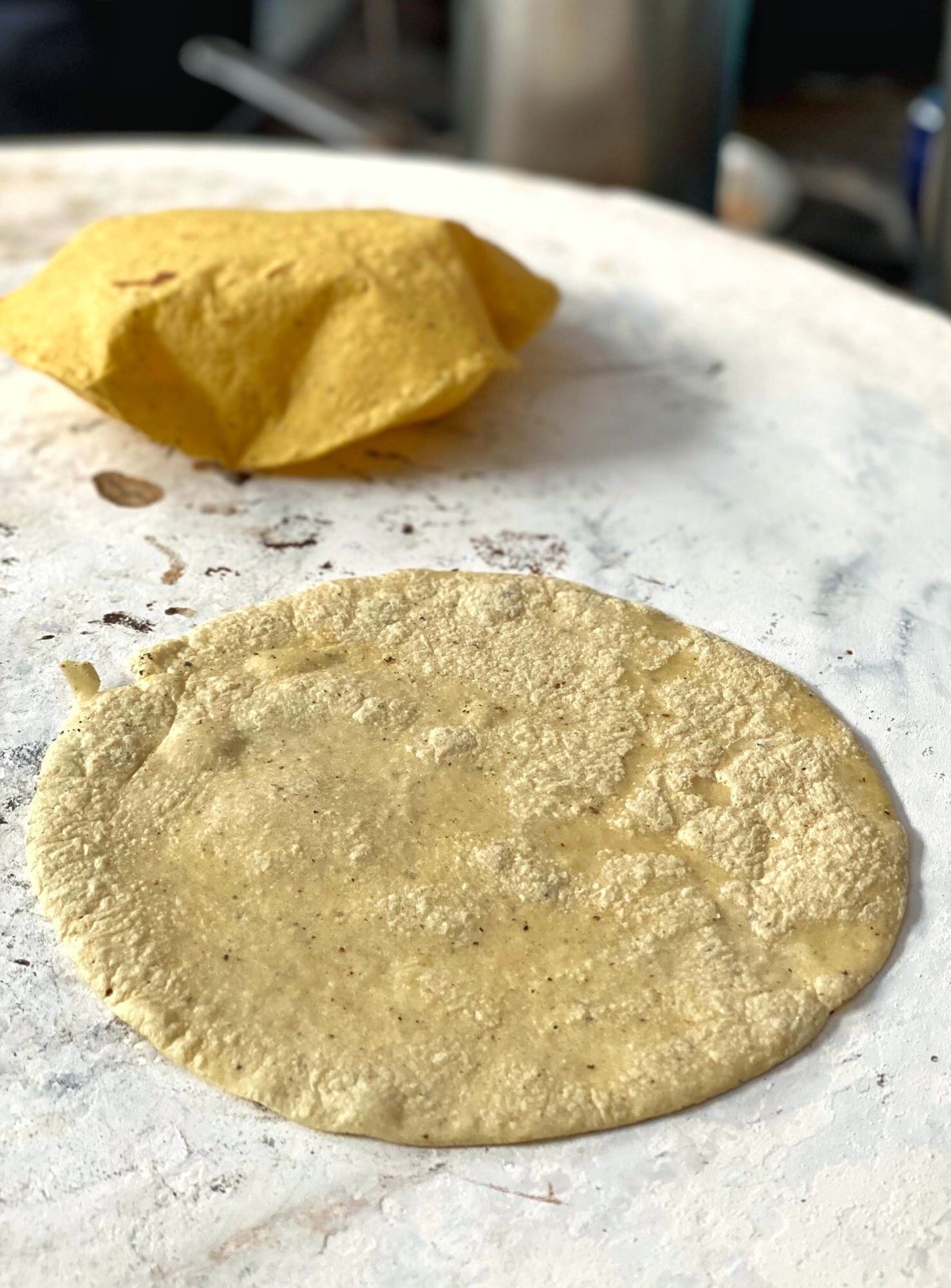
We had a lovely outdoor breakfast on the rooftop of a place that makes great tortillas. That flat tortilla on the plate in the upper right of the picture above is actually an egg cooked inside a tortilla. So good.
Tags tortilla, Oaxaca, Mexico
ocheese.jpeg

Oaxacan cheese with a little something extra: chilis

April 12, 2021

Another treat from the Tlacolula market here in Oaxaca, Mexico: cheese made with chilis. You would think this would be super spicy, but the chilis are all very mild and the cheese is mild, too. It’s got very subtle flavors. The indigenous market sellers use banana leaves as the “packaging.” So delicious.

Tags Mexico, Oaxaca, Cheese
eggs.jpeg

Amira picked up some turkey eggs at the market

April 11, 2021

These two turkey eggs Amira bought at the Tlacolula market here in Oaxaca, Mexico, are just plain big. We’re going to make omelets with them later.

Tags Mexico, Oaxaca, Eggs
IMG_6878-01.jpeg

Anatomy of the perfect tamal

March 28, 2021

These were the most delicious, authentic and, well, perfect tamales we have ever tried. Heirloom corn masa, super flavorful locally grown beans and — the pièce de résistance — wrapped in the herb hoja santa, then corn husks. The salsa is handmade, medium hot from some relatively obscure chilis, smokey and wonderful.

Hoja santa, which is amazing when well used but not so great when cooks and chefs don’t know how to use it, is native to this region (Oaxaca, Mexico) and used by the Aztecs as medicine and even in chocolate.

The corn to beans ratio is also perfect. Nearly all modern tamales are overstuffed with too much cheap GMO corn. This is how they used to be made, with far less higher quality corn.

Note that all these ingredients are prehispanic and local — no cheese, chicken or other imported ingredients.

Tags Oaxaca, Mexico, Tamal
DSC00318-03.jpeg

This stuff has ruined me for hot sauce

March 27, 2021

First things first: When we arrive in Oaxaca, we grab a jar of this stuff. Macha is oil made spicy with pepper flakes. It also contains peanuts for flavor. It’s very hot and very tasty.

Of course, Amira makes a much better chili oil, loaded with garlic as well. But this will hold us over until she can get to the local markets to buy the stuff she needs. -Mike

Tags Mexico, Oaxaca, Macha
o1.jpg

Traveling to Oaxaca to explore the food, culture and architecture of this Mexican gem

March 25, 2021

Waking up in Oaxaca to the chirping of birds and the hum of this city on the second day of spring was nothing short of glorious. Even after arriving exhausted from California, being in Oaxaca again is a dream come true. We had been scrambling to get ourselves ready to reclaim our digital nomad lifestyle after sheltering in place for many months. (Note: This post is an excerpt from the Gastronomad Newsletter.)

We’re living in a traditional Oaxacan house, which belongs to a friend of a friend. It’s as pleasant as can be and perfect for doing the work Mike and I do. It has a nice big kitchen with lots of natural light where I can work on creating recipes for the Spartan Diet Journal. 

The house has a wonderful open air courtyard where hummingbirds love to visit and we enjoy watching them from floor-to-ceiling windows as we sit in front of our laptops every day. We have a nice hipster bakery cafe next door — the smell of baking butter is wafting through the windows as I write this.

Travel is even more meaningful than it used to be somehow. Mike and I have truly loved our lifestyle and always feel so grateful and blessed. But traveling and seeing our Oaxacan friends again makes us so happy (even if we can't hug and we have to meet outdoors keeping distance and wearing face masks).

Pandemic woes are temporary. But Oaxaca is eternal. 

Oaxaca is a state. But the history and culture (including food culture) of Oaxaca centers on the Oaxaca Valley in the Sierra Madre Del Sur Mountains. 

The Zapotec civilization ruled the Oaxaca valley between around 700 BC until two years after the first Spanish set foot on the Mexican mainland (around 1521). Although there are many indigenous languages spoken in the State of Oaxaca today, the main language group is Zapoteco, which has 7 distinct languages and more than 100 dialects. It's mainly these Zapotec peoples — their farming and food practices — that make Oaxaca such a unique culinary paradise. 

Mexico is the food capital of the Americas, and Oaxaca is the food capital of Mexico. 

The Spanish brought the food cultures of the Arab world (having previously expelled the Moors from Spain, but not their food culture) and Asia (having established a trade route between their various colonies, including in the Philippines and elsewhere in Southeast Asia). But no import could rival the incredible food types of the native Americans in general, and Southern Mexico in particular. This tiny tropical area, from the Oaxaca valley to Guatemala, and from the Pacific to the Atlantic, gave the world the cultivated or domesticated varieties of corn, chocolate, tomatoes, tomatillos, avocados, chilis, squashes, turkey, papayas, vanilla, jicama, chia seeds, allspice, many species of beans and hundreds of spices and herbs. 

What's different about Oaxaca compared with many other Mexican regions is the combination of specific types of food production, plus the existence of 16 officially recognized indigenous groups faithfully preserving ancient foods and food practices. 

While all of Mexico's "greatest hits" are present here — (amazing hot chocolate, corn tortillas, sweet breads, sweetened watery drinks and all the rest — Oaxaca is especially well known throughout Mexico for many traditional dishes and drinks originating in the region. Some of the more well known include: 

o5.jpg

mole

Oaxaca is called the "Land of the Seven Moles" because each of seven regions in the area is said to specialize in a specific type of mole that's different from the other six. These general mole types are black, red, light red, chichilo, green, yellow and manchamanteles (stainer of tablecloths). In fact, the "seven moles" label is an oversimplification or even a marketing fabrication. Despite this categorization, moles do vary widely from household to household and from seller to seller. Both the variety and quality of moles to be found in Oaxaca is overwhelming. (Mole is simultaneously the most Mexican and the most international food ever created, typically containing ingredients originating in the Americas (North and South), Europe, Asia and Africa.)

o3.jpg

tlayudas

A tlayuda is a large (about the size of a medium pizza) thin tortilla roasted on a comal or over fire and topped with beans and a combination of other ingredients including lard, avocado, some kind of meat, Oaxacan cheese and salsa. 

quesillo

Also known as Oaxacan cheese, quesillo is like a slightly more flavorful mozzarella or string cheese. Dominican friars brought the mozzarella idea from Italy to Oaxaca and used cow’s milk instead of buffalo milk. It's made into long ribbons and then bound up like a ball of yarn via the pasta filata process. While clearly an Italian import, the centrality of quesillo to Oaxacan dishes and also the quality of the cheese from Oaxaca makes it central to this region. 

Oaxacan tamales

While tamales are universal to Mexico, every region has its different varieties. Oaxacan tamales are wrapped in banana leaves (as is common throughout tropical Mexico and Central America, and often contain uniquely Oaxacan moles). 

o2.jpg

tetelas

Tetelas are made with corn masa wrapped around a filling that can include beans, chilis, pork, mushrooms, cheese and other ingredients, folded into a triangle shape, grilled and then topped with sour cream, cheese and even roasted grasshoppers. 

o4.jpg

memelas

Memelas are thick corn tortillas shaped to be filled with a spread of refried beans, lard, quesillo and topped salsa (similar to sopes). They’re shaped like tiny pizzas with a little border around to keep the filling inside the open face memela.

chapulines

Also found throughout Mexico, chapulines (roasted grasshoppers) are especially associated with Oaxaca because of the quantity and variety available in the Oaxaca Valley. Local markets feature baskets of different types piled high and sold by the kilo. They can be eaten in or on various foods, or just eaten by themselves by the handful with chili, lime, garlic or onion and salt. 

mezcal

One of the world's most exquisite, complex and sophisticated distilled alcohol drinks, mezcal is made from the agave plant (maguey). Before mezcal can be made, a mezcalero has to wait at least 7 to 9 years to begin the harvest and distillation process as most agave plants take at least 7 years to reach maturity at which point they can be harvested. Some wild agave species take 30 years to reach maturity. While mezcal is made in various regions around Mexico (including tequila, which is just one of the many varieties of mezcal), the vast majority is produced in the Oaxaca valley, which features vast agave plantations like the California wine country features vines. To make most mezcal types, the spikey leaves are cut off and the center "pineapple" is chopped, cooked underground, mashed, fermented and distilled using traditional handcrafted methods that go back generations. Different mezcales have different characteristics based on the type and age of the plant, the terroir of where it's grown, the harvesting, cooking, fermentation and distillation processes, the ingredients added for flavor (including in rare cases turkey meat or specific worms), the style and amount of aging and other factors. 

o6.jpg

pulque

Pulque, which is fermented agave juice, is to mezcal what beer is to whiskey — it's the same basic ingredient fermented rather than distilled. Before the Spanish arrived, pulque was a drink mainly for the upper classes of native societies, and also used ritualistically. Before the 20th Century, it was drunk more commonly than beer. Pulque is a delightfully sweet and sour drink by itself, and also flavored with fruit juices and other flavorings. In our experience, Oaxaca has the best-tasting pulque we've encountered in Mexico thus far. 

The cultural expression of Oaxaca is apparent not only in its gastronomy, but also architecture, art, and preservation of its indigenous traditions that reward the senses with flavors, colors, aromas and beauty.

We're here mainly to continue preparing for the upcoming 2021 Oaxaca Experiences, which will bring people together from abroad to introduce them to local friends and the local community, as well as the beauty and deliciously unparalleled splendor of Oaxacan culture. 

This will be a once-in-a-lifetime culinary and cultural immersion to experience Oaxaca’s authentic expressions of flavors, aromas and colors through a deep exploration of its food, beverages, architecture, folk art and handmade crafts as well as the warmth and wisdom of its people. We hope you get to enjoy this epic travel adventure. -Amira

Tags Mexico, Oaxaca, Culture, Authenticity
horchata1.jpg

The wonderful world of horchata

February 24, 2021

Note: This is an excerpt from the free Gastronomad email newsletter. Click here to subscribe.

Everywhere you go in Mexico, you can find wonderful beverages called aguas frescas — water-based refreshments. And these typically have some natural flavor, plus sugar. So you can find hibiscus, tamarind, pineapple, cantaloupe, guava, passion fruit, watermelon and dozens of others. 

We have them in the United States, too. Just about every restaurant or street vendor in the US will offer at the very least lemonade or iced tea, both of which are "aguas frescas" — natural flavor, sugar and water. 

One of the most interesting agua fresca is horchata, which is widely available in Mexican restaurants and taco stands in the United States. I suspect that most Americans and probably most Mexicans think horchata is from Mexico. In fact, the Americas are merely the final destination for a beverage that goes back thousands of years. 

IMG_1789.jpg

Americans got horchata from Mexico. Mexico got it from Spain. Spain got it from Valencia. (Valencia was independent from Spain when Spain conquered Mexico.) Valencia got it from North African Muslims (the "Moors"). The “Moors” got it from Egypt. The Egyptians got it from sub-Saharan Africans in what is now Nigeria and Mali.

They've been drinking horchata in that part of Africa since at least 2,400 B.C -- and they still drink it there. They call it kunnu aya.

IMG_0444.jpg

The truth is that horchata has a long history, and every culture that embrace it made it their own. 

Horchata began as a drink made from an African weed called cyperus esculentusk by the scientists, and colloquially as chufa sedge, chufa nut, nut grass, yellow nutsedge, tiger nut sedge, tiger nut, edible galingale, water grass or earth almond. 

The weed also grew in the Americas. Plants in the tiger nut family were used as a food source by Native Americans, Africans and others at least 9,000 years ago. 

IMG_1756.jpg

(Our word "horchata" comes from the Valencian word "orxata." Because of New World bastardizations and novel ingredients, the Valencians now call it "horchata de chufa" to differentiate the newer innovations.)

Everybody changed it. The Africans and egyptians drank their tiger nut drink straight. The Moors or Valencians probably added sugar and cinnamon. The Spanish in the New World swapped the tiger nut for local substitutions.

Mexicans have always made horchata with rice. Central Americans use a roasted seed called morro. Various countries like Puerto Rico and Venezuela added sesame seeds. Ecuador makes pink horchata using flowers and herbs. 

E69C1495-496F-462A-AC54-431DCFBD3B6C.jpg

Both Mexicans and Americans started adding milk and other ingredients and flavorings. You can find crazy innovation and mashups around horchata in trendy restaurants in the US and Mexico. Now you can get horchata coffee drinks at Starbucks, horchata cocktails at bars and restaurants and find other variations on the horchata theme. 

Regardless of nomenclature, horchata's journey is just like any other food's journey, traveling across geography, time and culture and evolving as it goes.  

horchata2.jpg

We have lived extensively in three of the major horchata-obsessed places — Valencia, Mexico and El Salvador — our favorite by far is Salvadoran horchata made with morro, which is flavored with cinnamon, nutmeg, coriander seeds and allspice. Horchata there is sweet, but that sweetness is balanced by a nutty roasted flavor that's amazing. 

The place most obsessed with horchata is Valencia, which lack's Mexico's incredible diversity of drinks, but which does use tiger nut to make it. Valencia is Europe's only major producer of tiger nut, and they cultivate their own variety that doesn't exist outside of Valencia. 

But we also love Mexico City’s best rice-based horchata during our Mexico City Experience (pictured) and enjoy very good Horchata during our Oaxaca Experience. 

Horchata is a wonderful drink no matter where you enjoy it. But enjoying the local varieties in the places where they make it is a true joy. 

Tags Mexico, Mexico City, Horchata
← Newer Posts Older Posts →
Screenshot 2018-09-18 at 11.35.49 AM.png

Love the blog? Buy the book!


Latest & Greatest

Featured
Nov 30, 2025
Interested in a future Gastronomad Experience? Sign up for our free newsletter!
Nov 30, 2025
Nov 30, 2025
Nov 25, 2025
This Thanksgiving, We Raise a Glass to Gratitude
Nov 25, 2025
Nov 25, 2025
Nov 24, 2025
Discovering a World of Magic and Joy
Nov 24, 2025
Nov 24, 2025
Nov 18, 2025
From Barcelona Vineyards to an English Fireside
Nov 18, 2025
Nov 18, 2025
Oct 27, 2025
Magic, Awe, Wonder, and Joy in Barcelona!
Oct 27, 2025
Oct 27, 2025
Sep 24, 2025
Living globally (but at home in Venice)
Sep 24, 2025
Sep 24, 2025
Sep 24, 2025
Love and Joy in Oaxaca
Sep 24, 2025
Sep 24, 2025
Aug 11, 2025
Journeys That Renew the Heart
Aug 11, 2025
Aug 11, 2025
Aug 11, 2025
Provence, and the Art of Living
Aug 11, 2025
Aug 11, 2025
Aug 11, 2025
How to choose your Italian Gastronomad adventure
Aug 11, 2025
Aug 11, 2025
Get the Gastronomad newsletter!